
Instant SOS & Emergency Response for Workforce Safety
Enable employees to instantly raise emergency alerts and provide real-time location information for faster incident response using BLE, UWB, GPS and RTLS technologies.
The Cost of Delayed Emergency Response
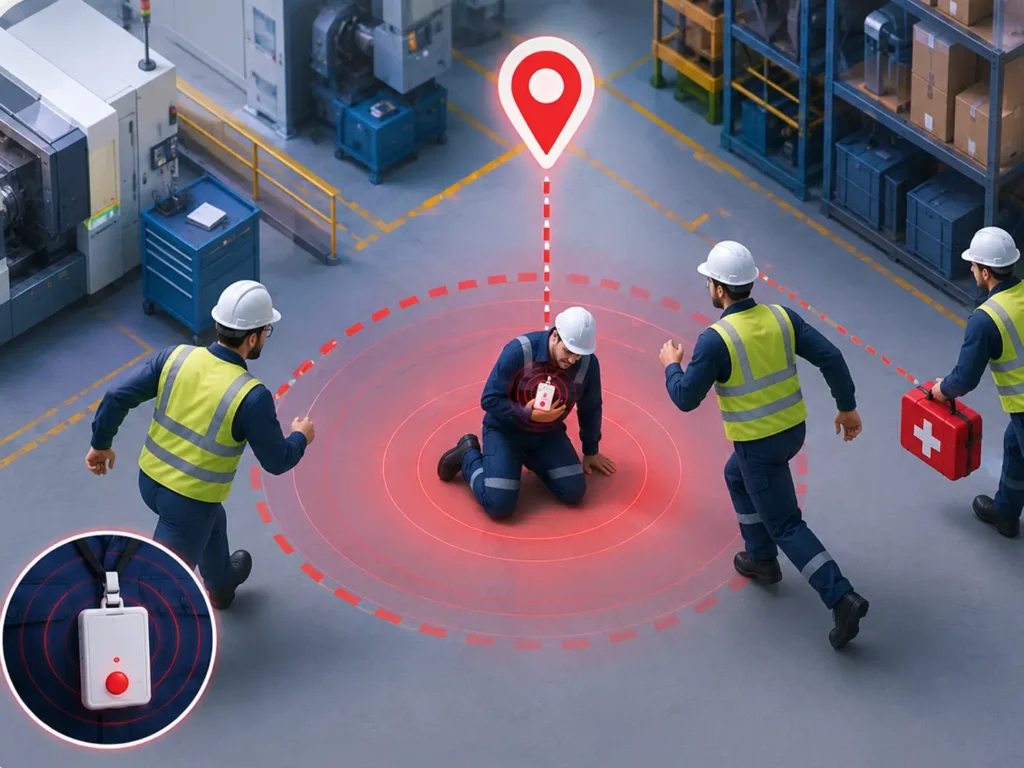
During workplace emergencies, every second matters. Delays caused by unknown worker locations, poor communication, or manual reporting increase risks and impact safety. Real-time visibility helps organizations respond faster and coordinate rescue efforts more effectively.
Delayed Emergency Response
Responders lose valuable time trying to determine the employee’s exact location.
Unknown Worker Location
Supervisors may not know where an emergency has occurred, especially in large or multi-building facilities.
Communication Delays
Employees may be unable to communicate during medical emergencies, accidents, or security incidents.
Increased Operational Risk
Delayed intervention can lead to more severe incidents and longer operational disruptions.
Limited Incident Visibility
Safety teams lack a centralized view of active emergencies and response progress.
Incomplete Incident Records
Manual reporting makes post-incident analysis and compliance more difficult.
Emergency Events That Can Trigger Alerts
How SOS & Emergency Response Works
1.
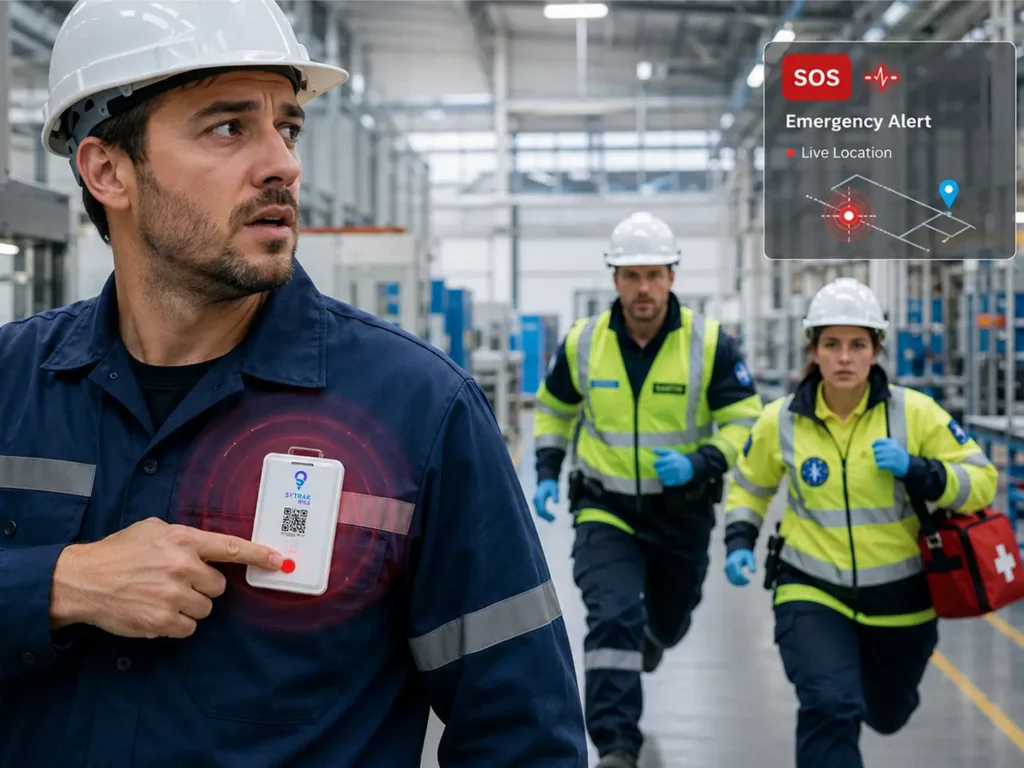
Wearable Tag
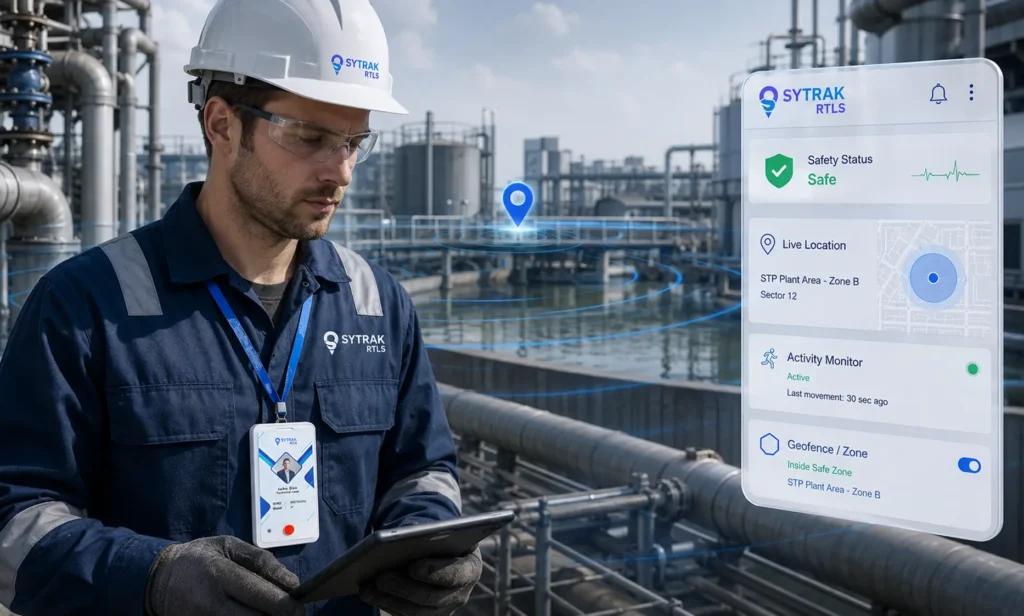
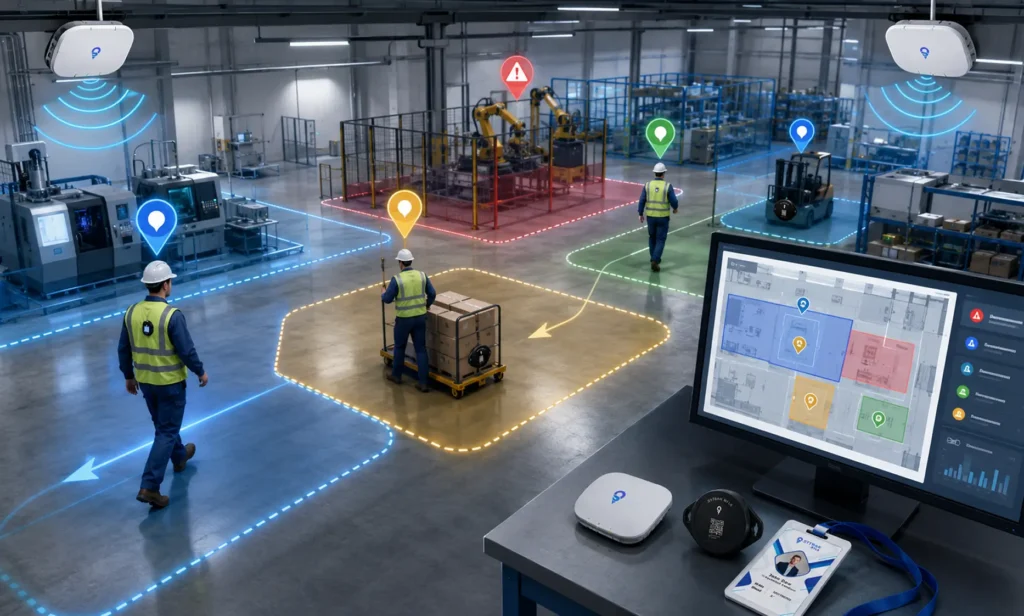
Employees carry RTLS wearable tags equipped with an SOS button and real-time location capabilities.
2.
Reader/ Gateway Network
Readers, gateways, and sensors continuously monitor worker locations and immediately detect SOS events.
3.
Emergency Alert
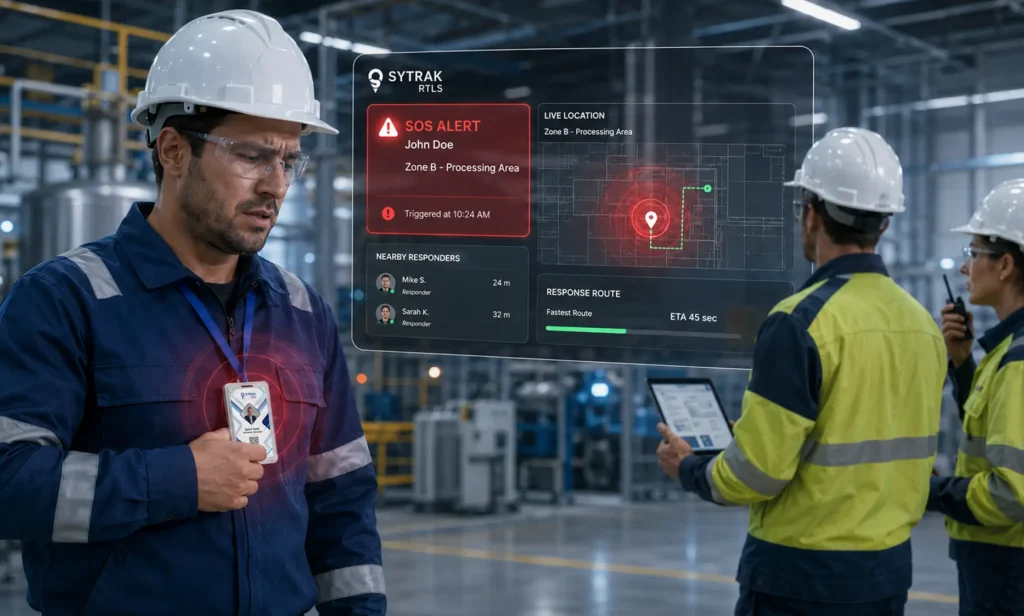
When an SOS event is triggered, the system instantly generates an emergency notification with the worker’s identity, live location, timestamp, and event details.
4.
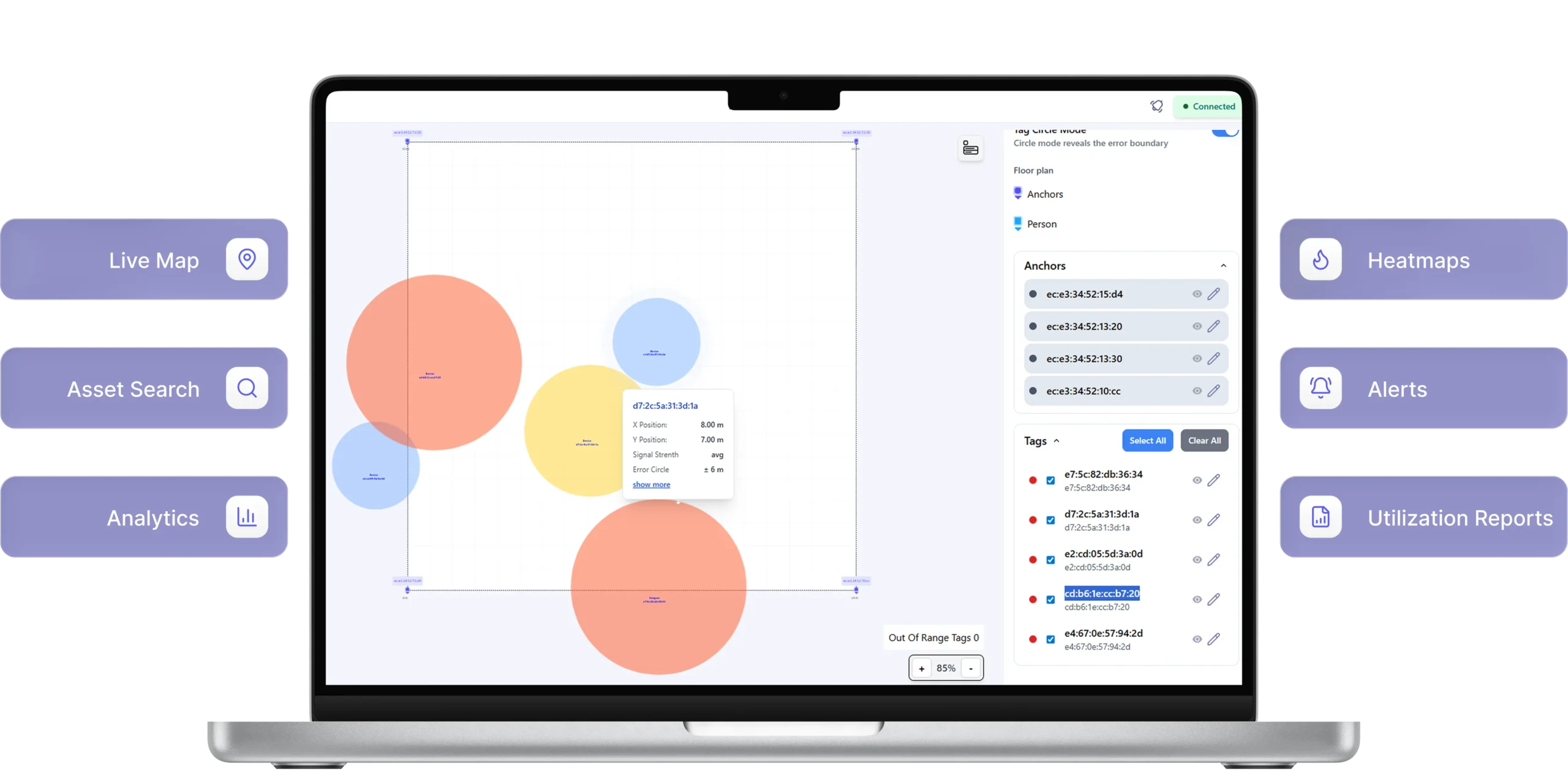
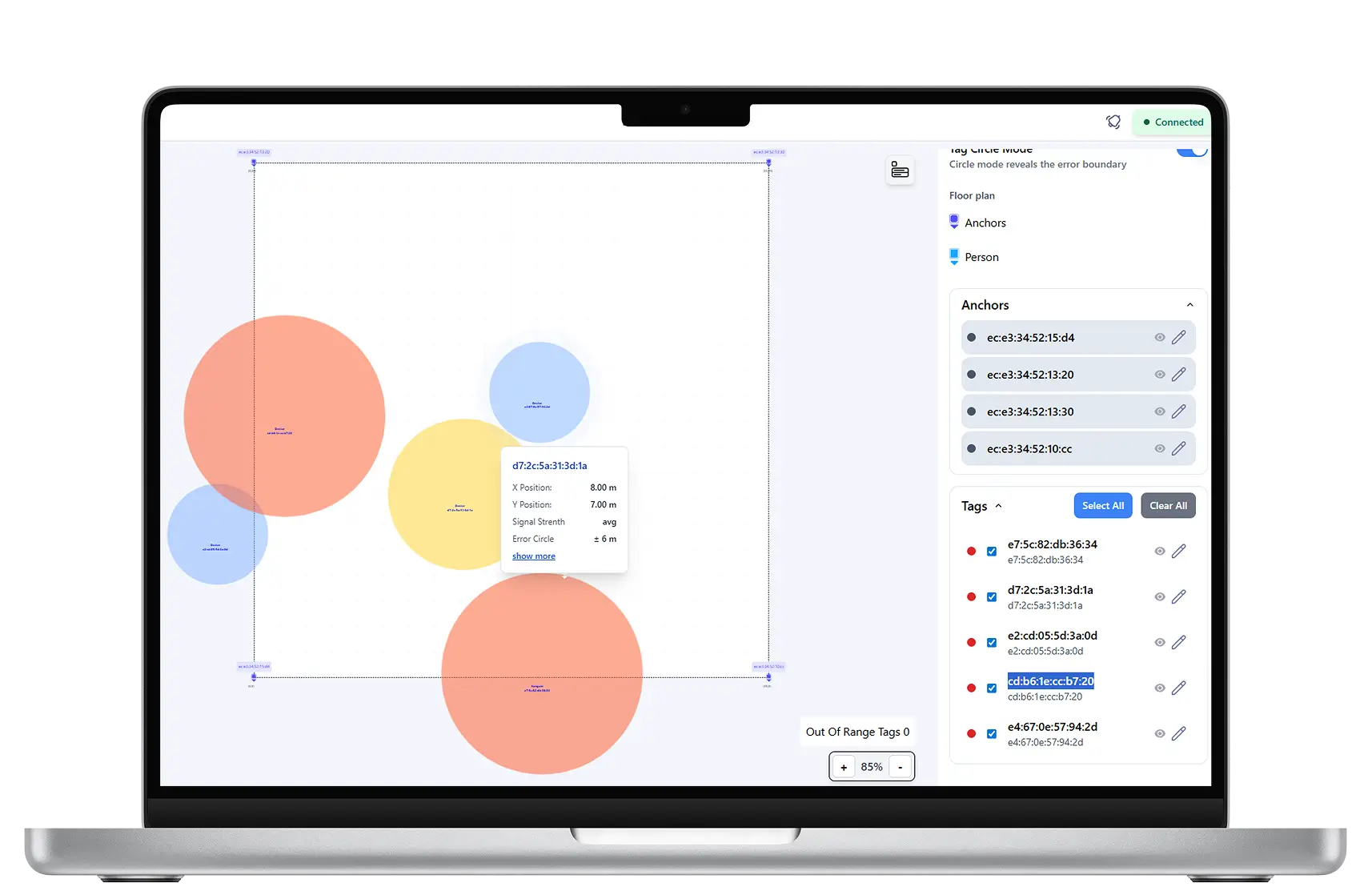
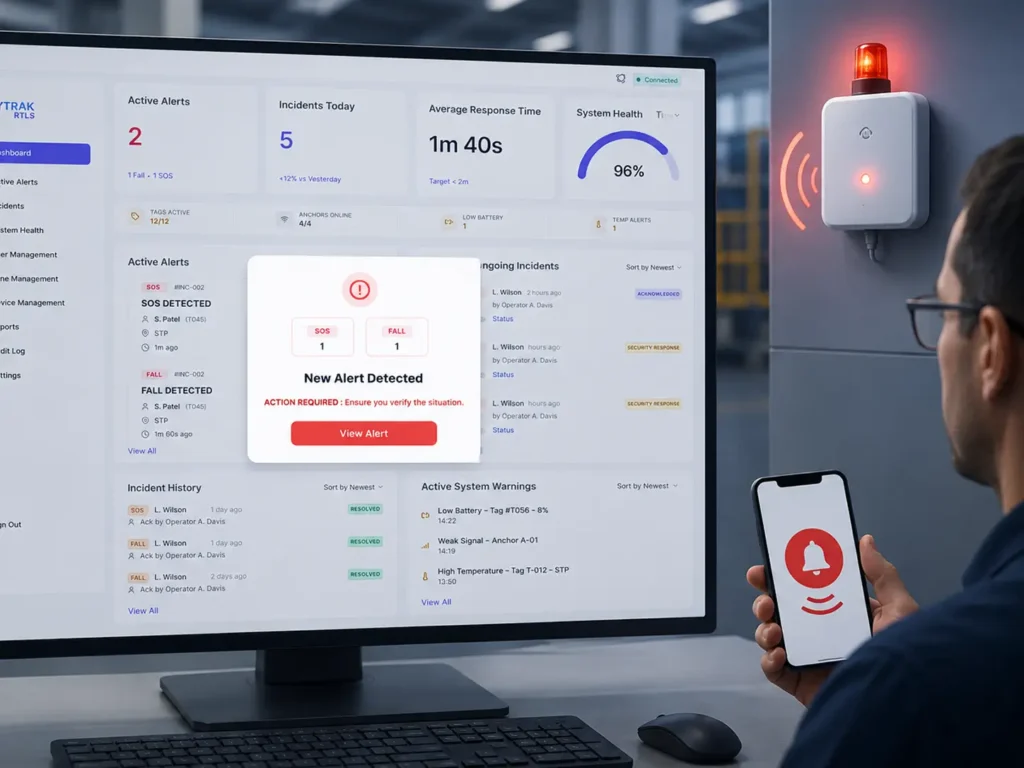
Live Emergency Dashboard
Supervisors monitor the worker’s location, nearby personnel, evacuation routes, and incident status through a centralized dashboard.
5.
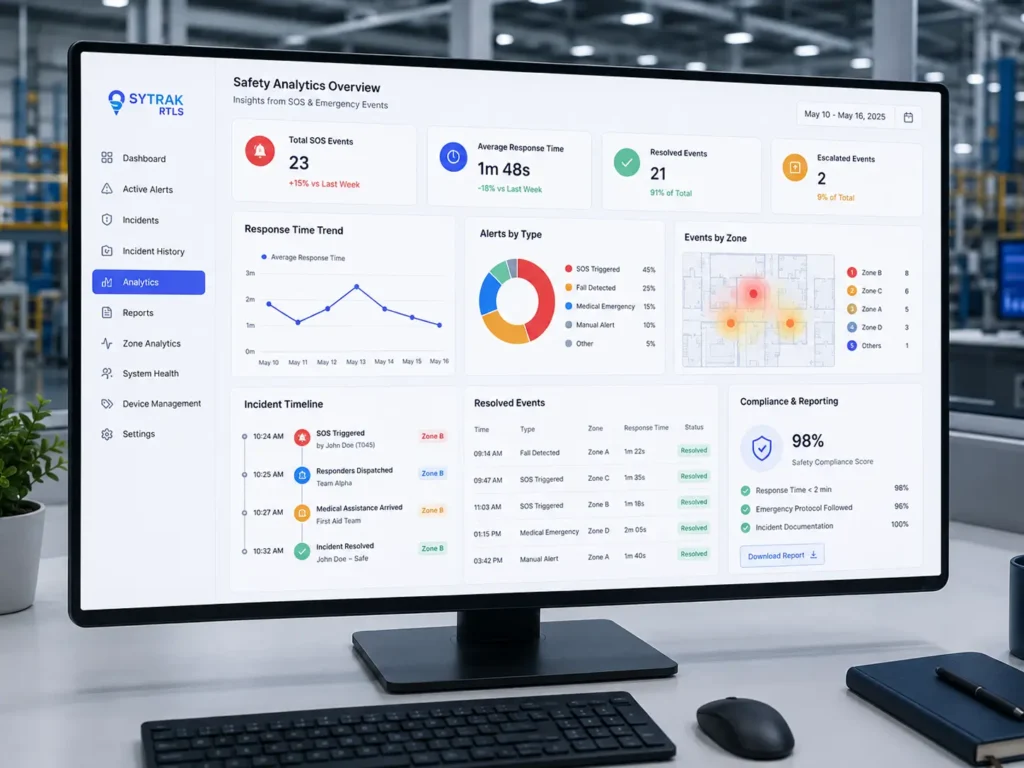
Analytics Dashboard
All emergency events are securely logged to support incident investigation, response analysis, compliance reporting, and continuous safety improvements.
Key Features
One-Touch SOS Activation
Real-Time Worker Location
Multi-Channel Notifications
Indoor & Outdoor Coverage
Incident Timeline
Geofence-Based Emergency Alerts
Nearby Responder Visibility
ERP & Safety System Integration
Incident Reporting
Business Impact of SOS & Emergency Response
| Challenge | Benefit |
|---|---|
|
|
✓ Faster incident response |
|
|
✓ Immediate worker visibility |
|
|
✓ Automated incident logging |
|
|
✓ Instant notifications |
|
|
✓ Better emergency coordination |
|
|
✓ Improved safety reporting |
Technologies
BLE RSSI
Cost-Effective Zone-level Tracking
BLE AoA
Sub-meter Indoor Positioning
UWB
High-Precision Location Tracking
RFID
Inventory and Checkpoint Visibility
GPS
Outdoor and Long-range Tracking
Emergency Response Dashboard
Success Metrics
Faster Emergency Response
Reduced Emergency Response Times
Enhanced Workforce Safety
Real-Time Personnel Visibility
Results may vary depending on deployment scope, operational environment, and tracking technology used.
Asset Tracking Across Industries
FAQs
Employees can trigger an emergency alert using a wearable device or mobile application. The system immediately shares the worker’s identity, live location, and incident details with supervisors and emergency responders.
Yes. SYTRAK RTLS supports indoor emergency location using BLE RSSI, BLE AoA, UWB, and RFID technologies, where GPS is unavailable or unreliable.
Alerts can be delivered through web dashboards, mobile applications, email, SMS, messaging platforms, or integrated enterprise notification systems.
Yes. The RTLS platform can display nearby personnel, helping organizations dispatch the closest available responder to the incident location.
Yes. Every SOS activation, response action, acknowledgement, and incident timeline is securely logged for compliance, audits, and post-incident analysis.
Yes. SYTRAK RTLS integrates with ERP, EHS, security management platforms, access control systems, and other enterprise applications using APIs and standard integration methods.
Related Use Cases
Lone Worker Safety
Protect lone workers with continuous monitoring, SOS alerts, inactivity detection, and real-time visibility.
Workforce Visibility
Monitor workforce location, movement, zone occupancy, and activity in real time using RTLS.
Geofencing
Monitor personnel and assets using virtual boundaries with real-time entry, exit, and zone violation alerts.
Attendance & Shift Visibility
Track medical equipment, staff, and patients across hospital wings for improved care delivery.
Anti-Collision & Proximity
Enable emergency mustering, evacuation tracking, and real-time headcounts during critical events.