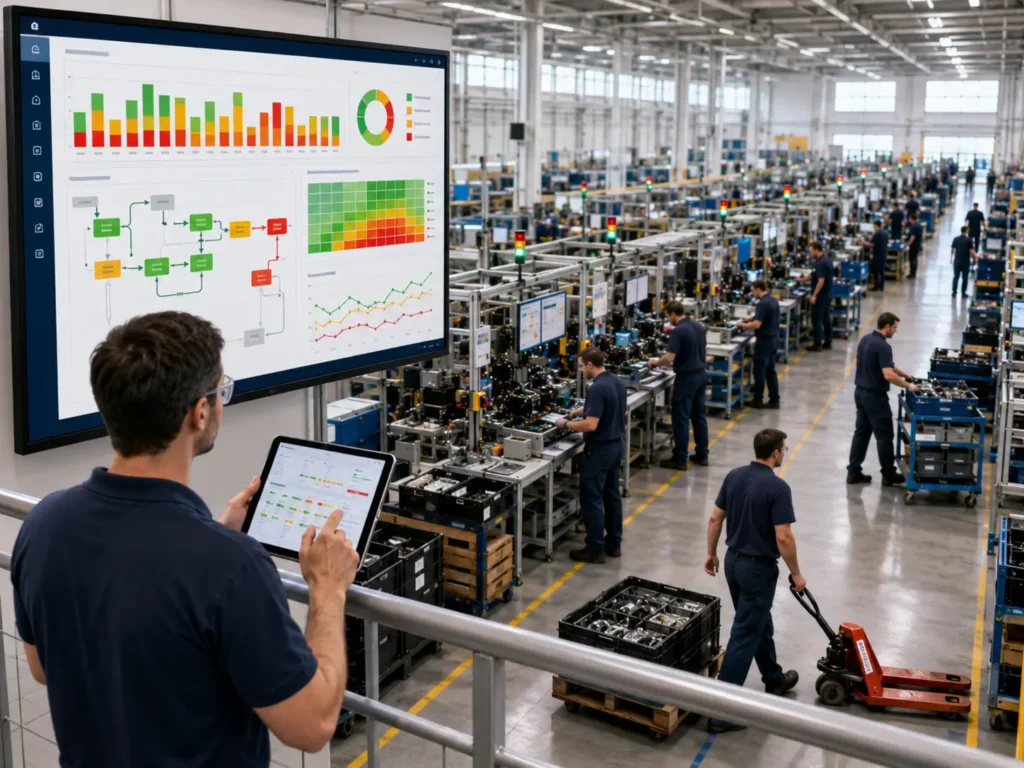
Production Flow Visibility Solution Platform
Track raw materials, work-in-progress (WIP), pallets, and production carriers across every workstation to improve line feeding, eliminate bottlenecks, and optimize manufacturing flow.
The Cost of Limited Production Visibility
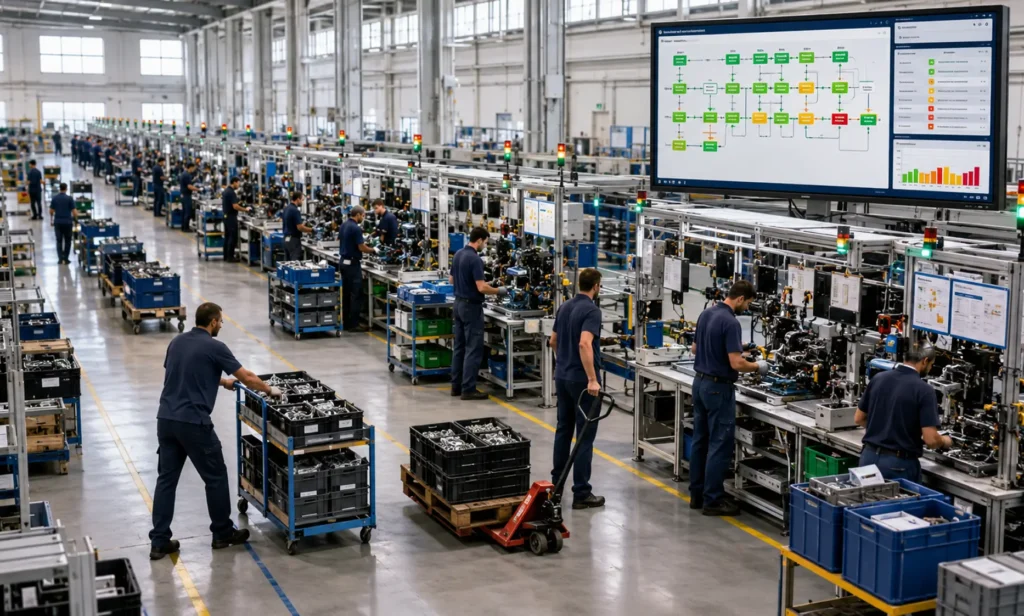
Modern manufacturing relies on continuous material movement between production stages. Without real-time visibility, materials are misplaced, lines wait for components, and bottlenecks go unnoticed. Production flow visibility helps monitor every stage and keep operations efficient.
Unknown Material Location
Production teams cannot determine where raw materials or WIP are within the manufacturing process.
Production Bottlenecks
Materials remain at specific workstations longer than expected, slowing overall throughput.
Line Starvation
Production stations wait for materials, causing machine idle time and reduced productivity.
Manual Production Tracking
Operators rely on manual updates to understand production progress.
Delayed Decision Making
Supervisors cannot quickly identify process delays or material shortages.
Limited Manufacturing Traceability
Organizations lack a complete digital history of how materials move through production.
What Can Be Tracked
How Production Flow Visibility Works
1.
Tag Materials & Carriers
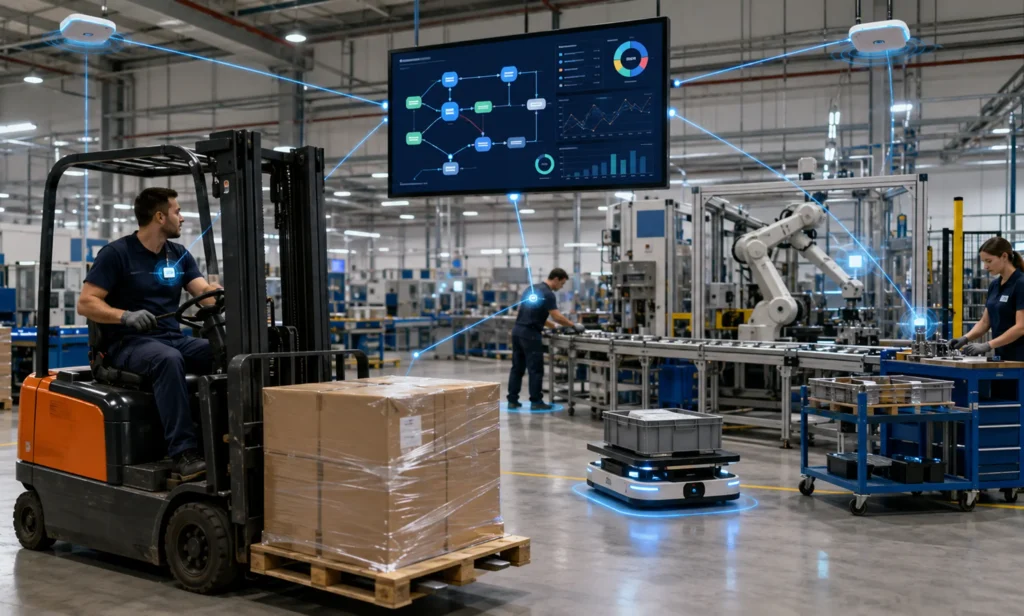
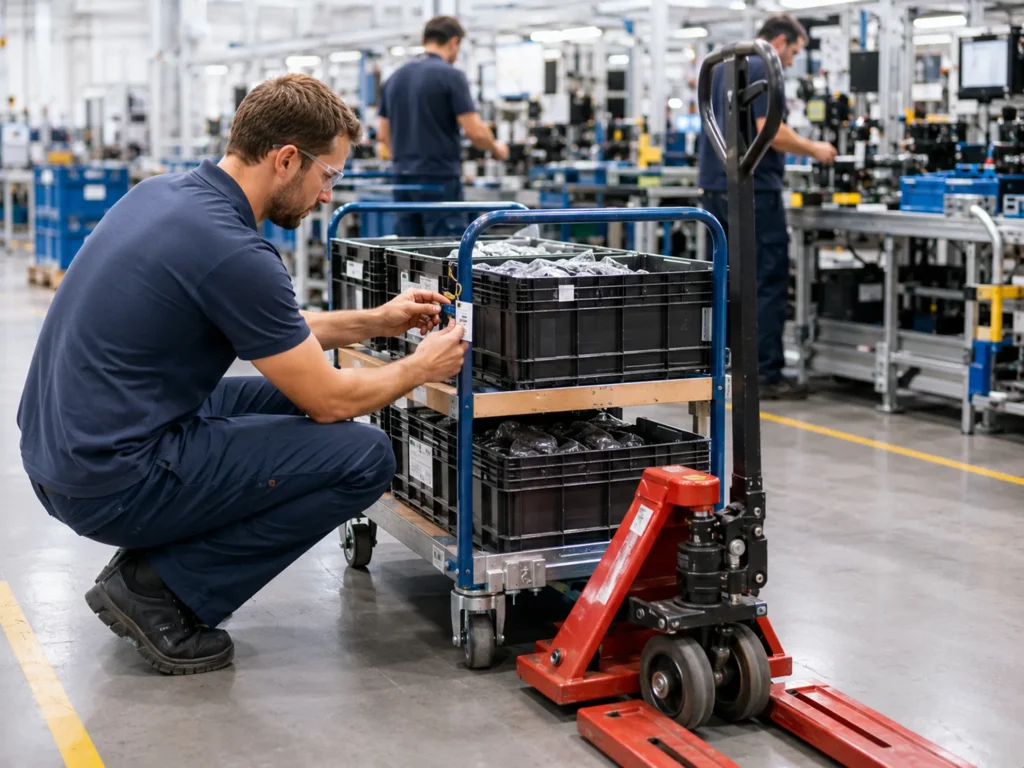
BLE, RFID, UWB, or hybrid RTLS tags are attached to pallets, trolleys, material carts, WIP carriers, or production containers.
2.
Reader/ Gateway Network
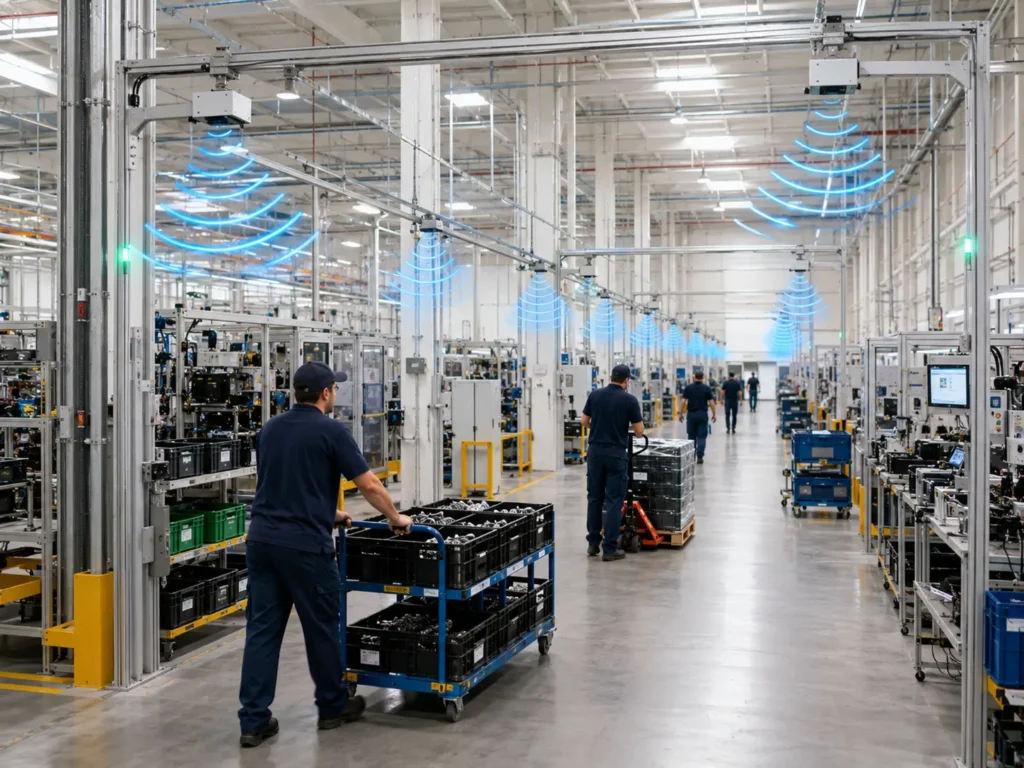
Readers, gateways, and positioning infrastructure continuously detect material movement throughout the production facility.
3.
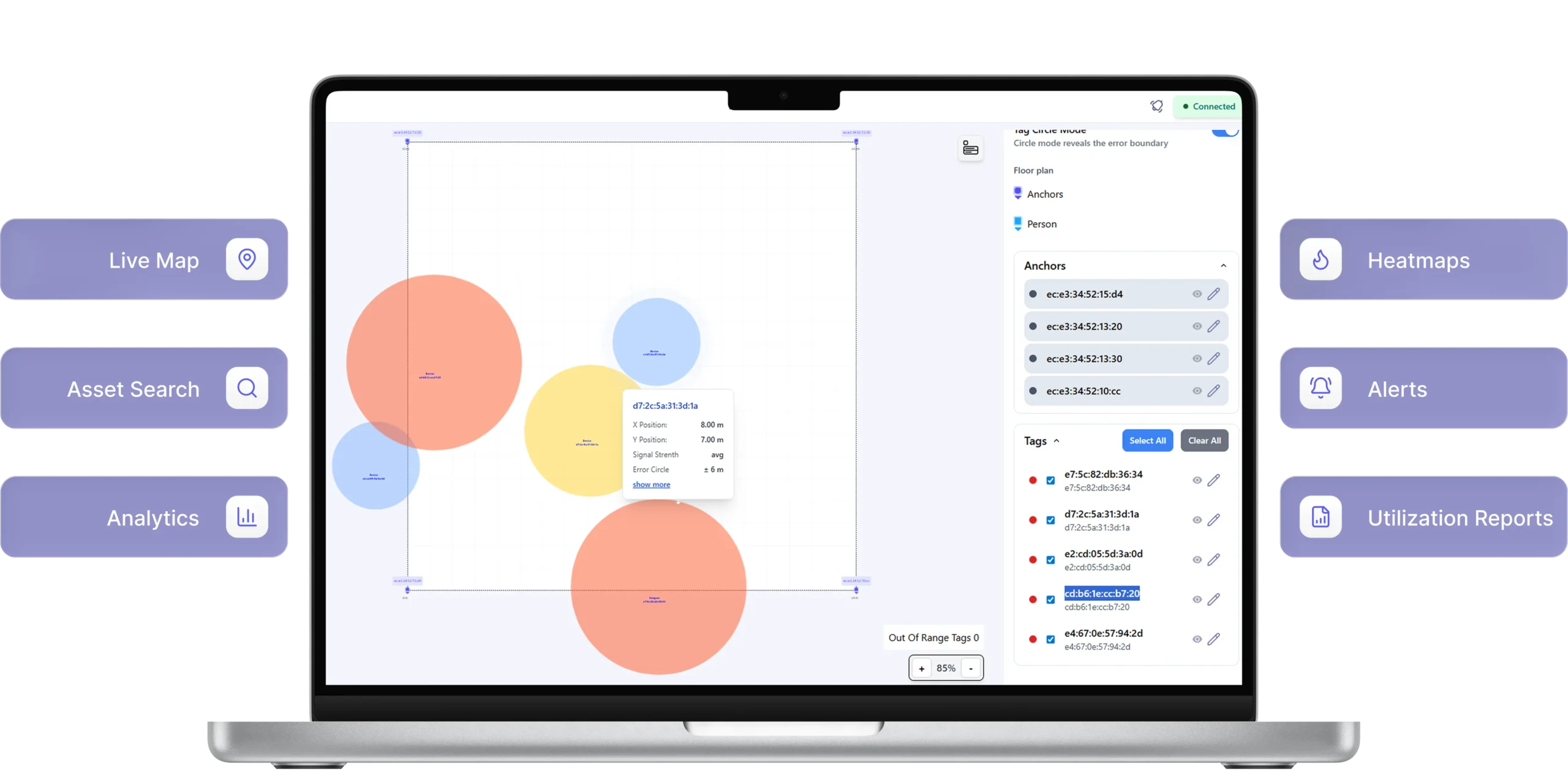
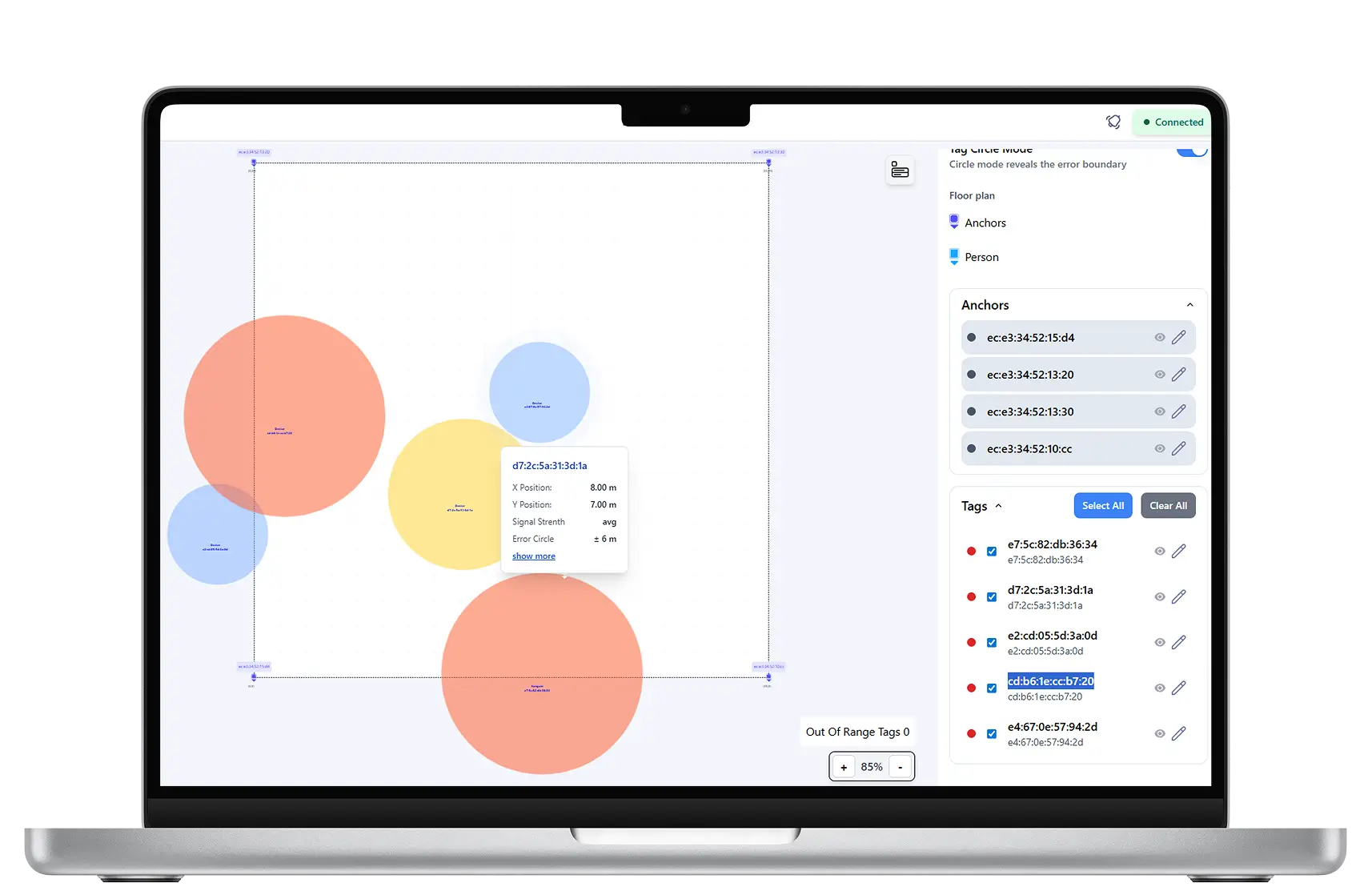
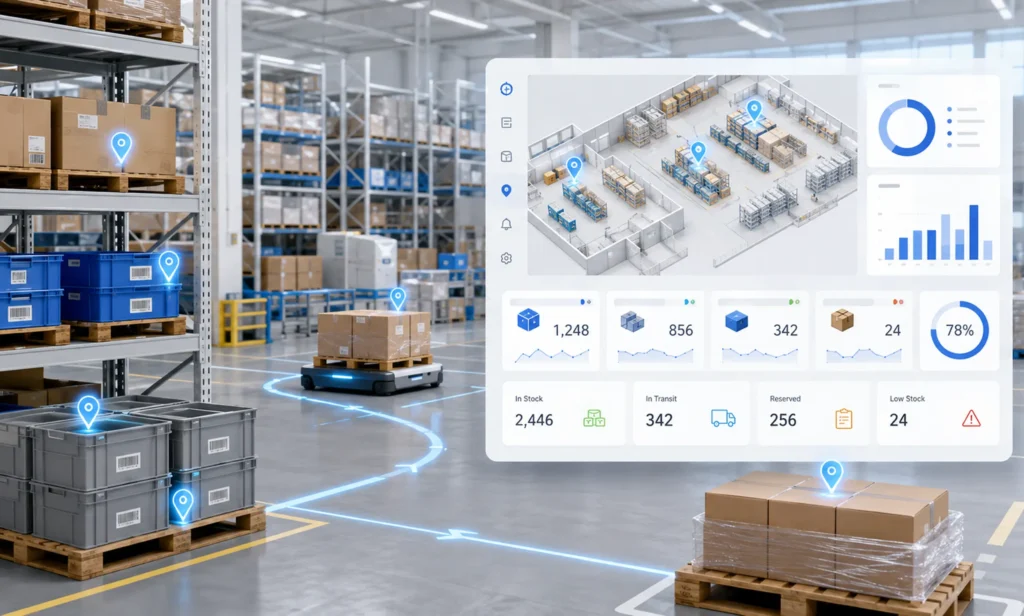
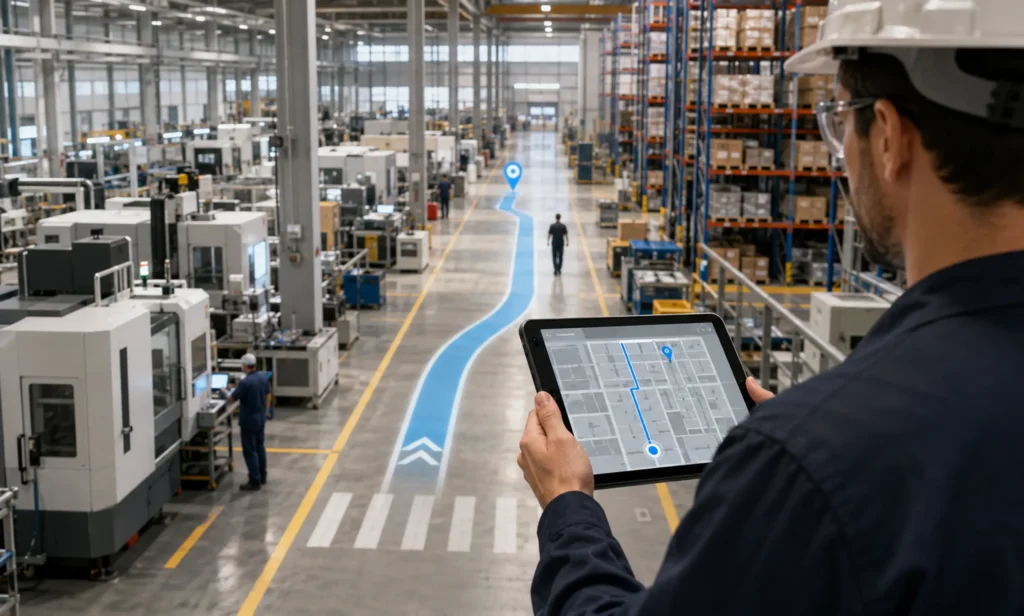
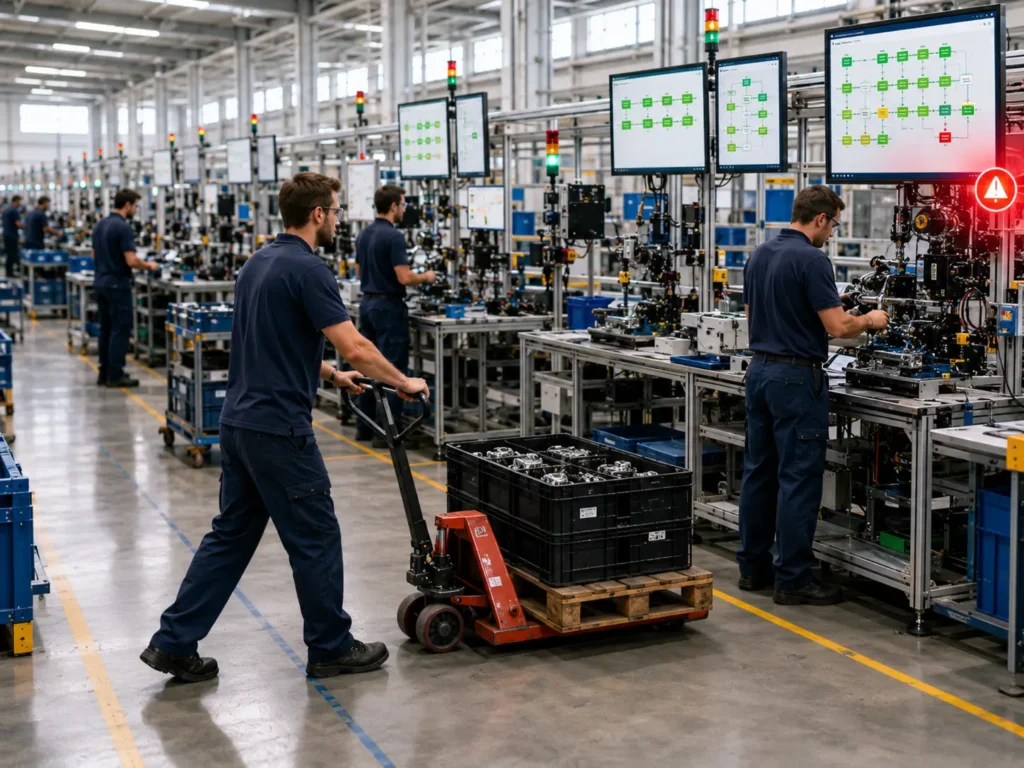
Live Dashboard View
The RTLS platform automatically identifies the workstation, production stage, or assembly line where each material is currently located.
4.
Workflow & Process Automation
As materials move between stations, the platform can trigger MES, ERP, PLC, or workflow actions, update production status, and notify downstream teams.
5.
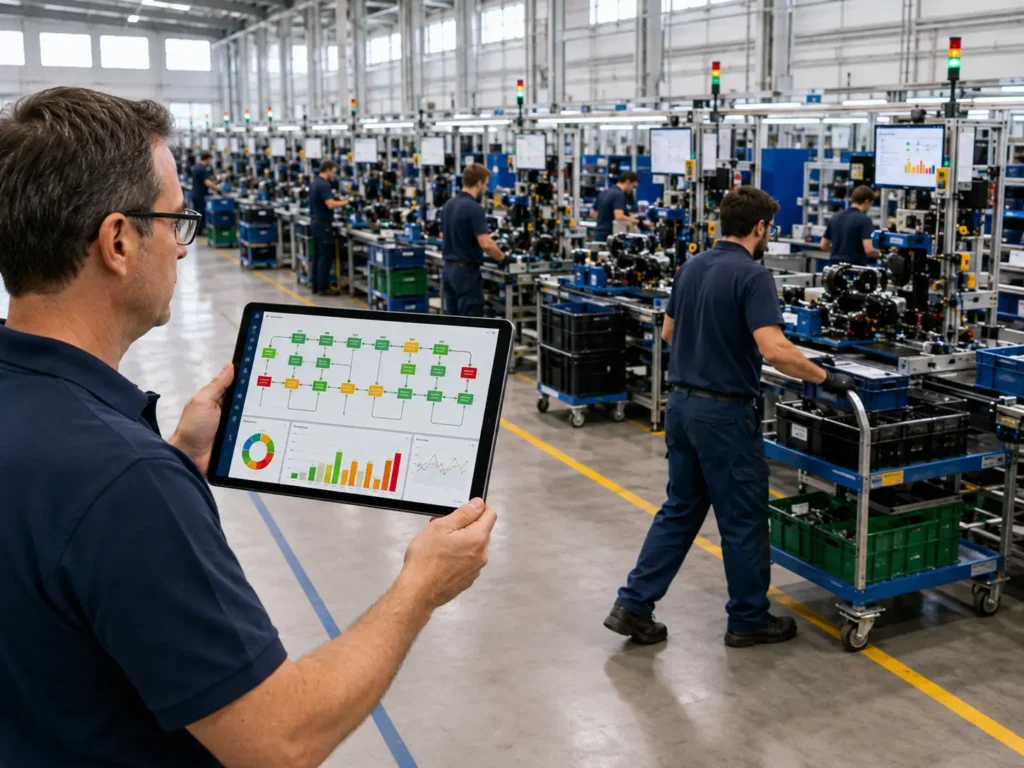
Analytics Dashboard
Supervisors monitor production flow, bottlenecks, dwell time, throughput, and material movement through centralized dashboards and reports.
Key Features
Real-Time Material Visibility
Production Stage Tracking
WIP Monitoring
Line Feeding Visibility
Bottleneck Detection
Dwell Time Analytics
Manufacturing Traceability
Workflow Automation
Enterprise Integration
Business Impact of Production Flow Visibility
| Challenge | Benefit |
|---|---|
|
|
✓ Complete production visibility |
|
|
✓ Faster bottleneck identification |
|
|
✓ Improved material availability |
|
|
✓ Automated production monitoring |
|
|
✓ Complete process history |
|
|
✓ Faster production planning |
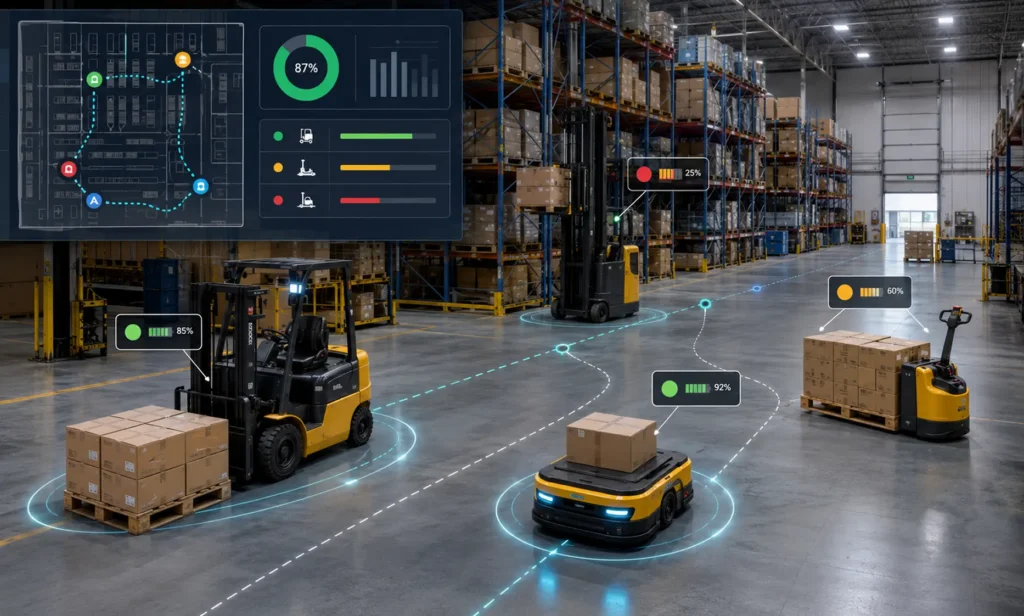
Technologies
BLE RSSI
Cost-Effective Zone-level Tracking
BLE AoA
Sub-meter Indoor Positioning
UWB
High-Precision Location Tracking
RFID
Inventory and Checkpoint Visibility
GPS
Outdoor and Long-range Tracking
Anti-Collision Dashboard
Success Metrics
Reduced Line Starvation
Lower Manufacturing Delays
Higher Throughput
Improved Production Visibility
Results may vary depending on deployment scope, operational environment, and tracking technology used.
Asset Tracking Across Industries
FAQs
Production Flow Visibility provides real-time insight into the movement of raw materials, work-in-progress (WIP), pallets, and production carriers across every manufacturing stage, enabling organizations to monitor production progress and optimize material flow.
Yes. SYTRAK RTLS continuously tracks materials as they move between production stations, assembly lines, inspection areas, storage locations, and dispatch zones, providing complete visibility throughout the manufacturing process.
Yes. The platform continuously monitors dwell time at each workstation and identifies materials or production stages experiencing abnormal delays, helping supervisors resolve bottlenecks before they impact throughput.
Yes. SYTRAK RTLS integrates with MES, ERP, PLC, SCADA, WMS, and other manufacturing systems to synchronize production events, automate workflows, and improve operational efficiency.
Yes. Every movement, workstation transition, dwell time, and production event is recorded, providing complete traceability from raw material receipt to finished goods.
Yes. Production Flow Visibility is particularly valuable for multi-stage manufacturing environments with 10, 20, or even 50+ production stations, where continuous material movement and process synchronization are critical for maintaining throughput.
Related Use Cases
Industrial Automation
Automate workflows, trigger real-time actions, connecting people, assets, equipment through RTLS-powered location intelligence.
Inventory Tracking
Track raw materials, work-in-progress, inventory and stock movement with real-time visibility across facilities.
Asset Tracking
Track tools, equipment, pallets, containers, vehicles, and high-value assets in real time efficiently.