Energy Consumption Monitoring for Industrial Equipment
Monitor the energy consumption of tools, machines, and shared equipment in real time to reduce energy costs, improve utilization, and support sustainable operations.
The Cost of Unmonitored Energy Consumption
Industrial equipment often consumes power even when not in use. Without equipment-level visibility, organizations struggle to identify inefficiencies and unnecessary energy usage. Real-time monitoring helps reduce costs and improve efficiency.
Unknown Equipment Energy Usage
Organizations cannot determine how much energy individual tools or equipment consume.
Idle Power Consumption
Equipment remains powered even when not in active use, increasing electricity costs.
High Energy Costs
Lack of equipment-level monitoring makes it difficult to identify energy-saving opportunities.
Limited Equipment Utilization
Energy consumption cannot be correlated with actual equipment usage.
No User-Level Accountability
Organizations cannot determine who was using energy-intensive equipment during a specific period.
Sustainability Challenges
Limited visibility makes it difficult to achieve energy efficiency and ESG objectives.
How Energy Consumption Monitoring Works
1.
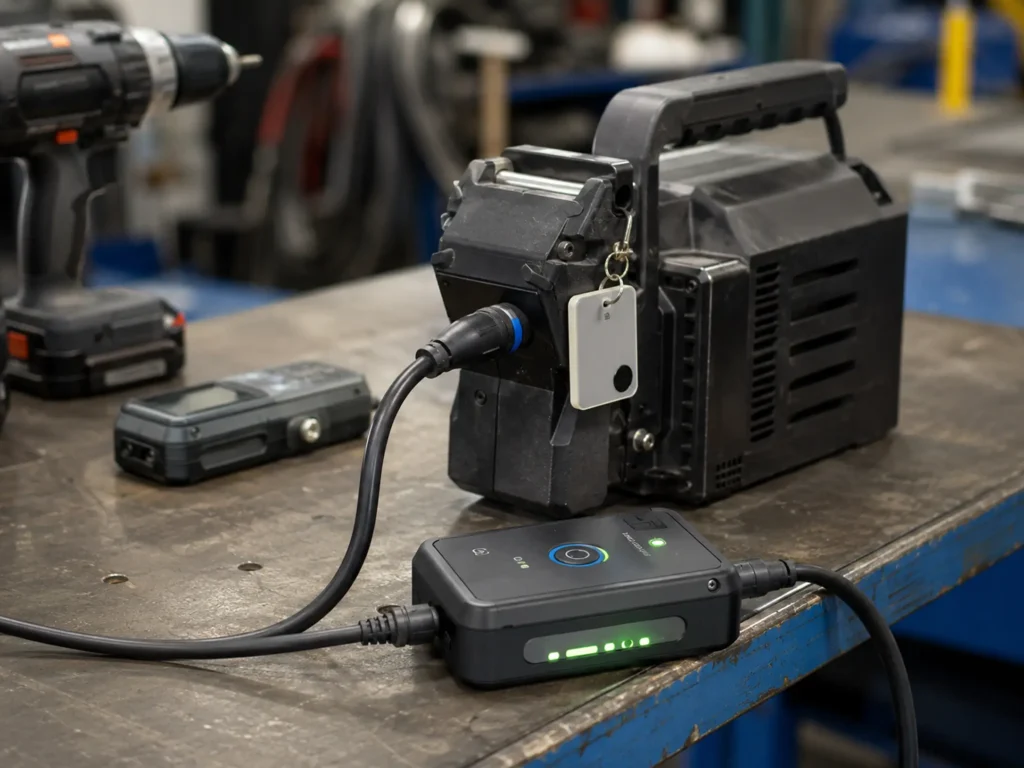
Asset Tag
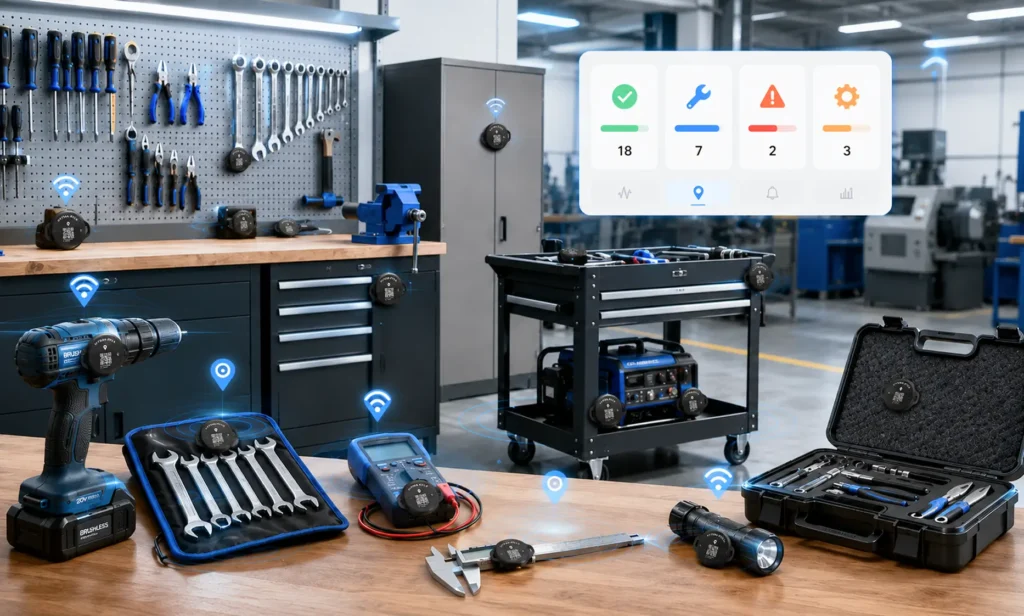
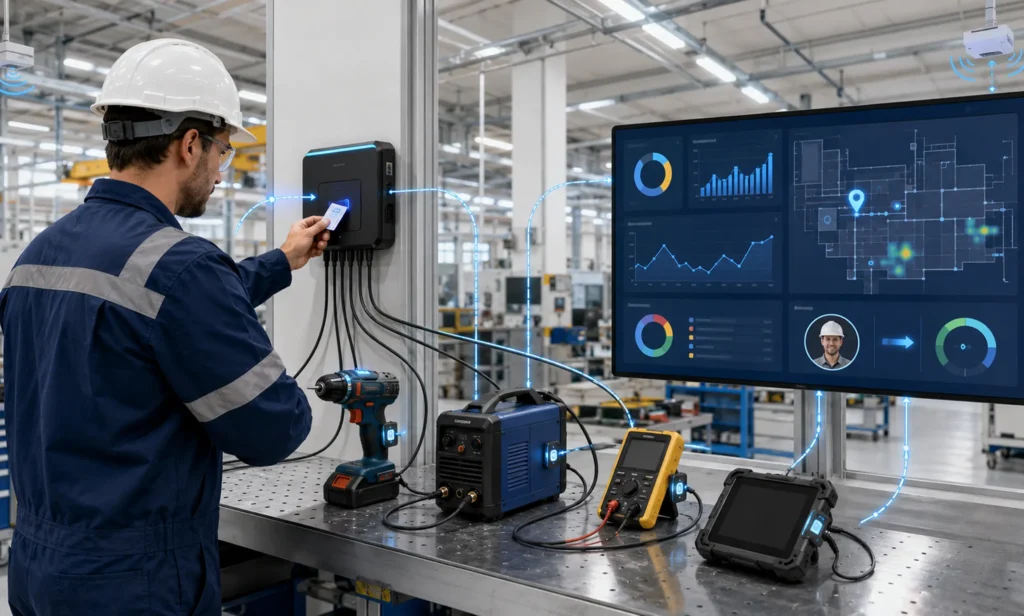
Equipment is connected through the SYTRAK Smart Asset Hub, which measures power consumption while serving as the asset accountability and authentication point.
2.
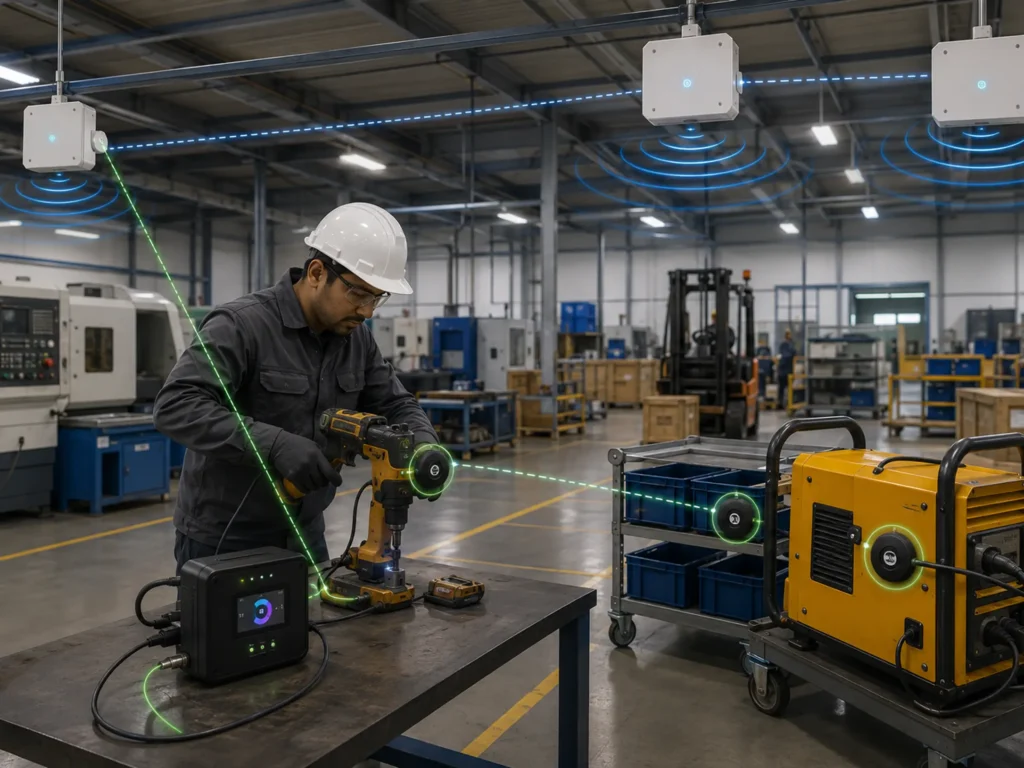
Reader/ Gateway Network
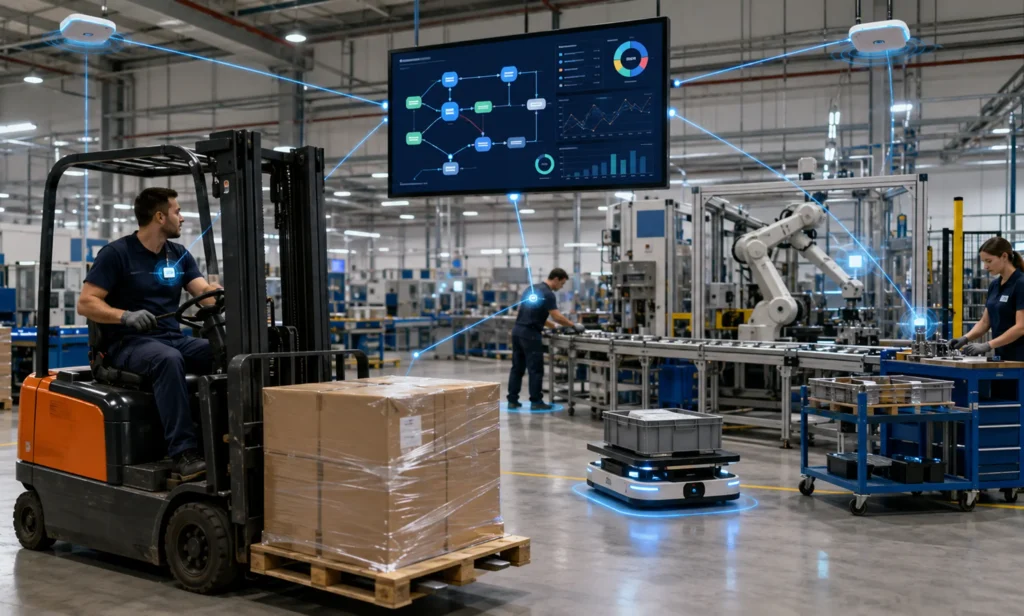
The Smart Asset Hub continuously measures energy consumption while the RTLS platform tracks the equipment’s location using UWB or BLE technologies.
3.
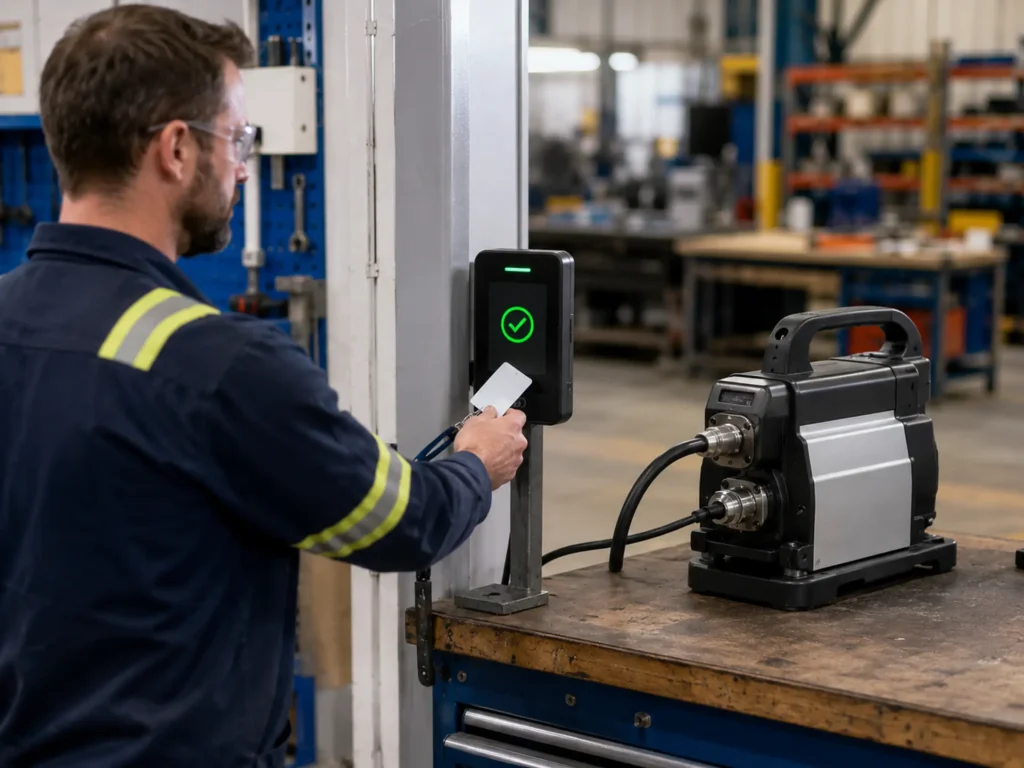
RFID User Authentication
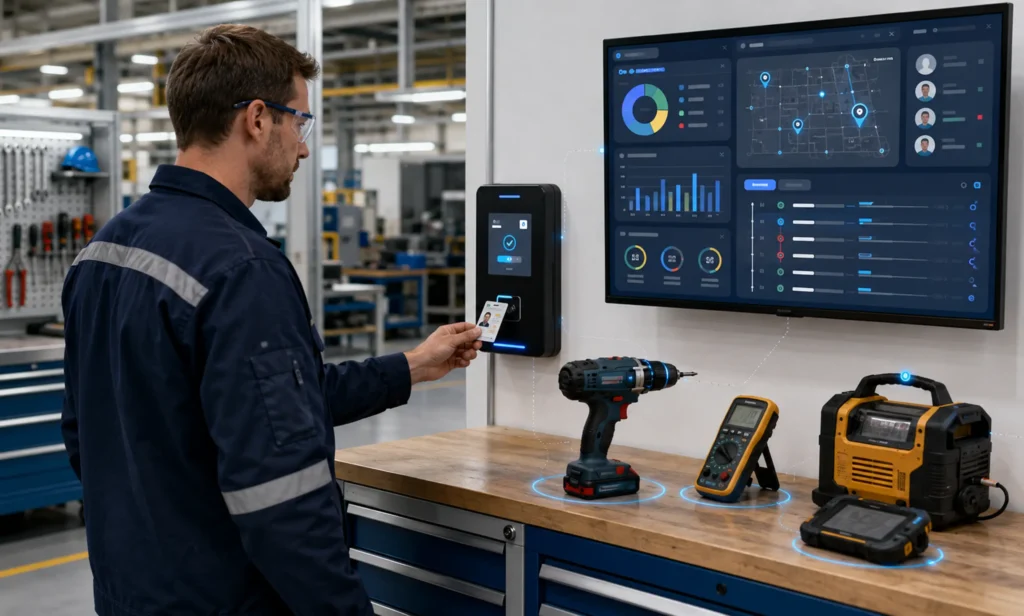
Employees tap their RFID ID card on the Smart Asset Hub before using the equipment. The system records who is using the asset and associates energy consumption with the authenticated user.
4.
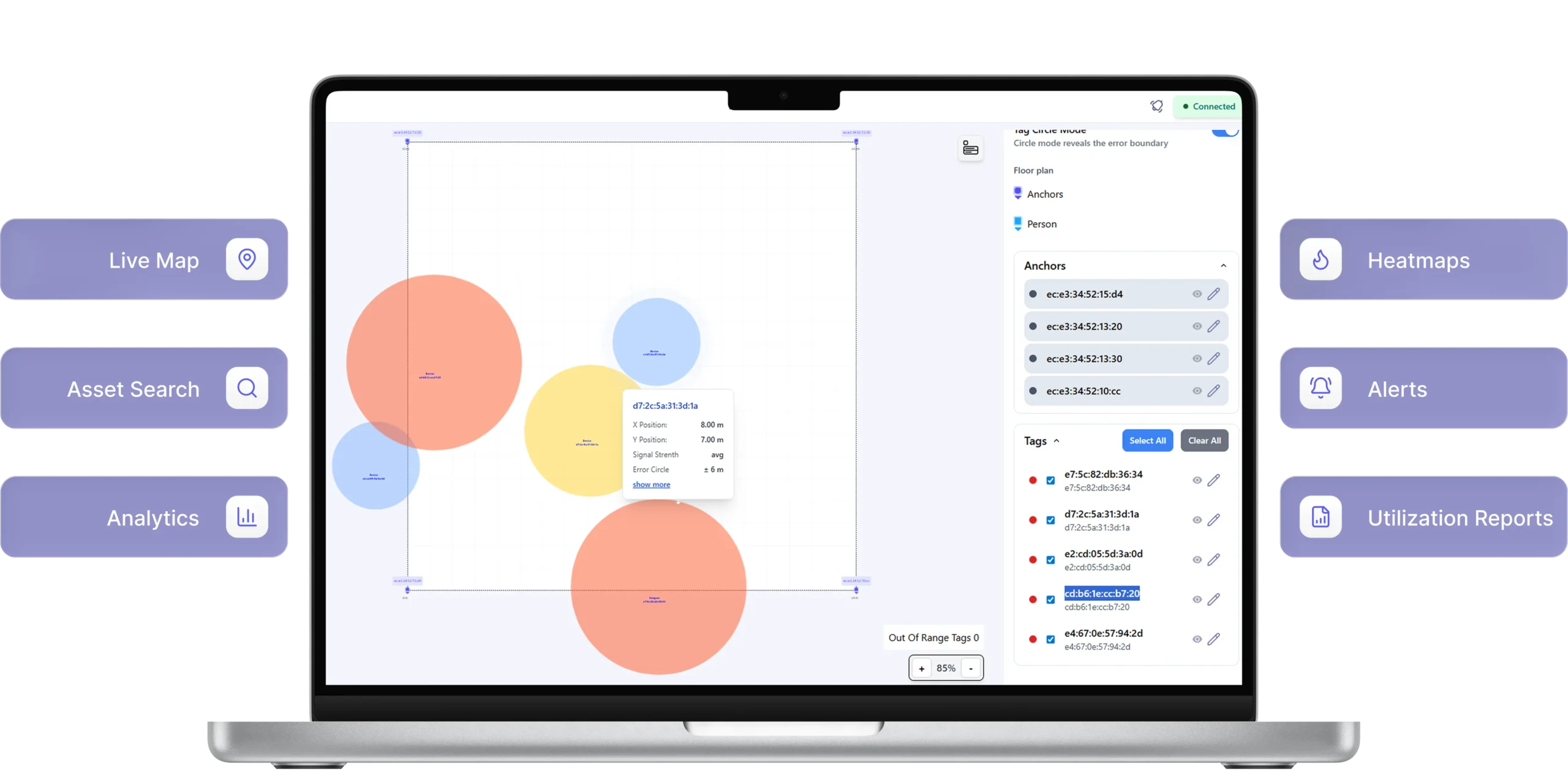
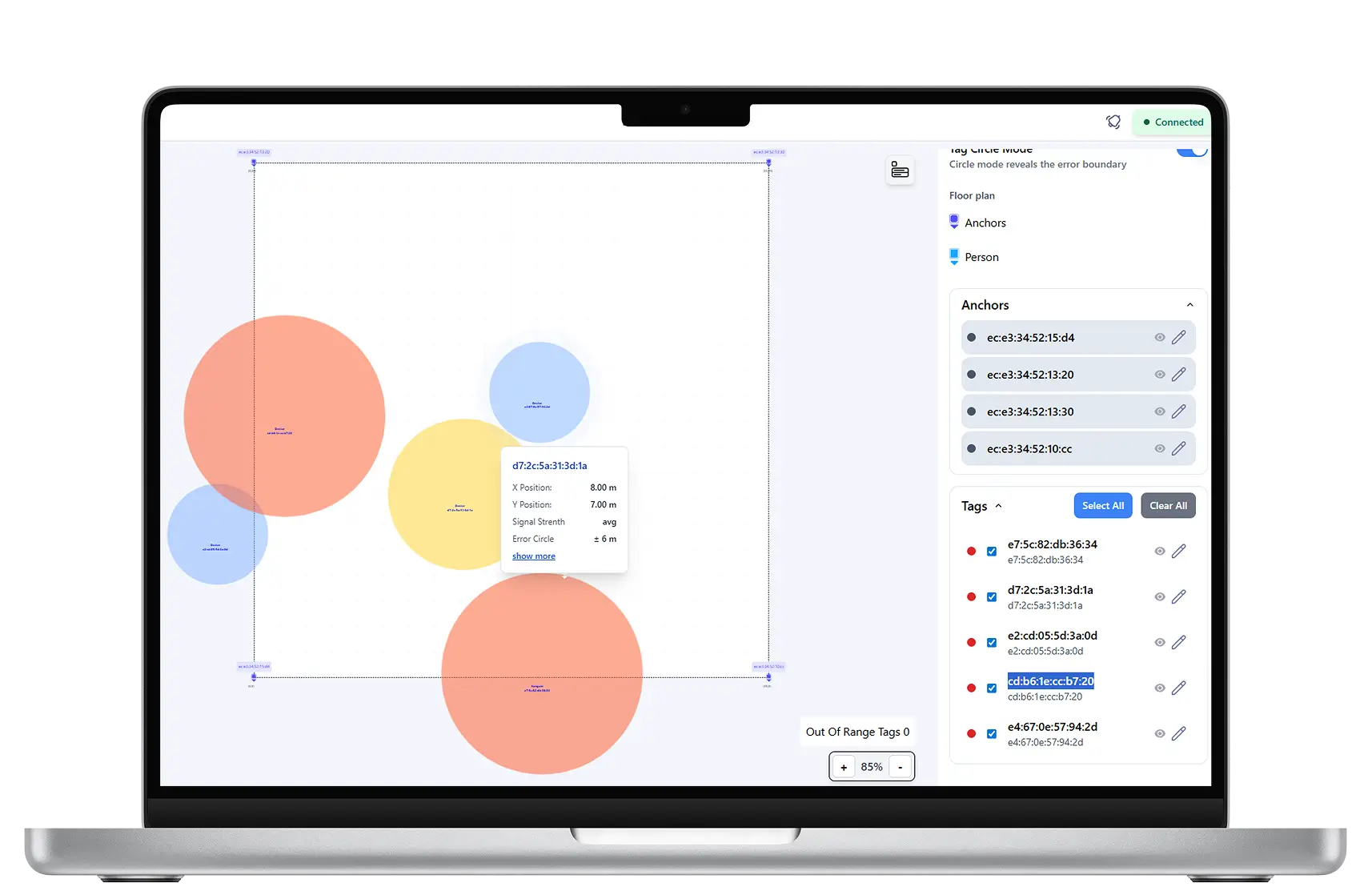
Live Dashboard View
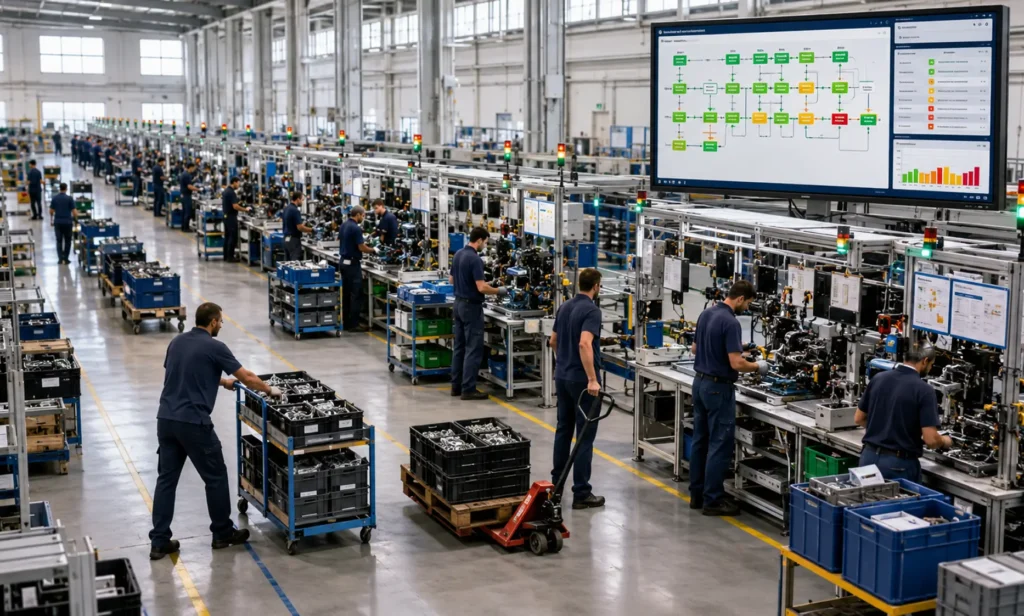
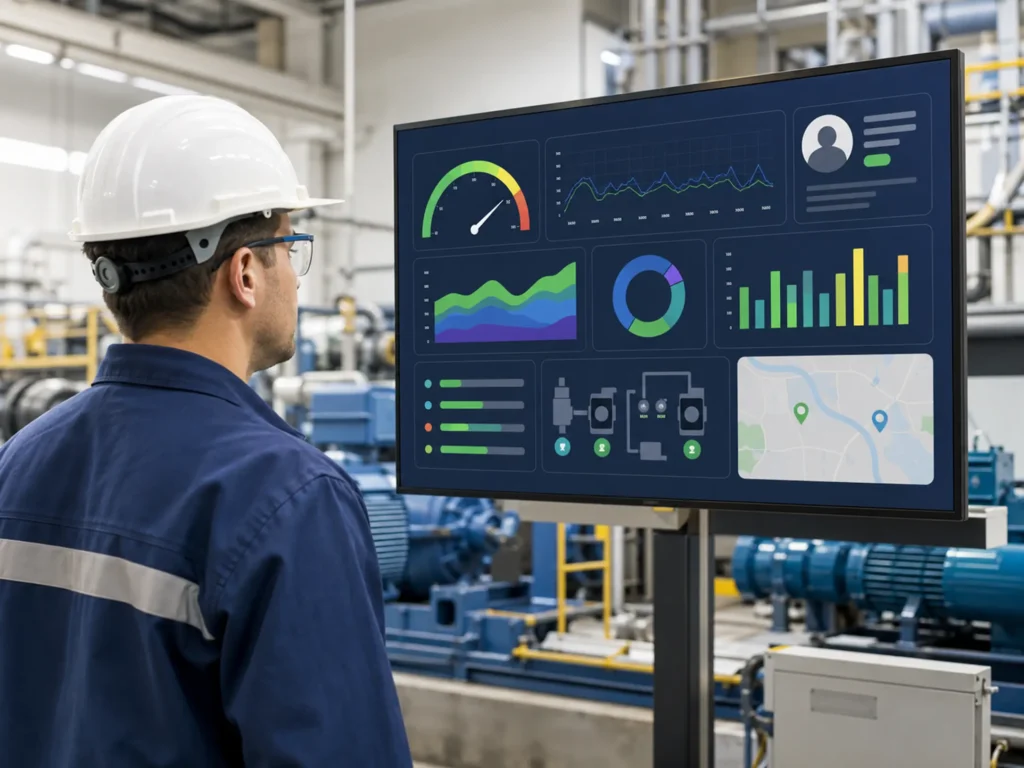
Supervisors monitor equipment-level power consumption, utilization, ownership, operating duration, and energy trends through centralized dashboards.
5.
Analytics Dashboard
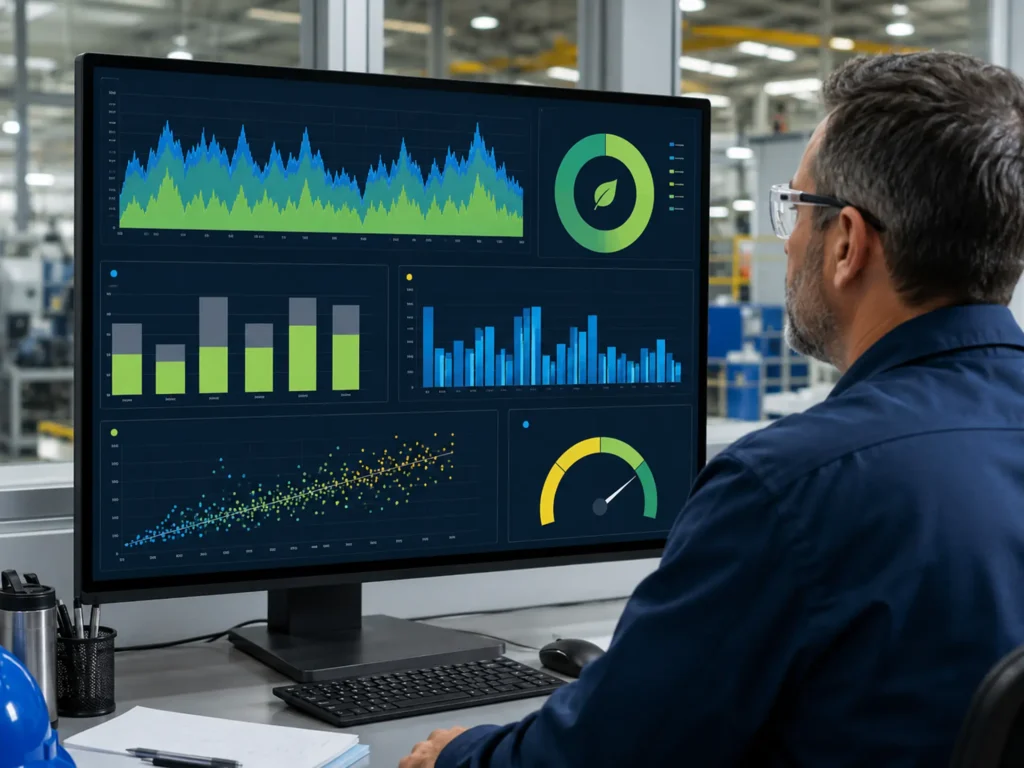
Analyze energy usage, idle consumption, equipment efficiency, utilization trends, and user-based energy reports to identify optimization opportunities.
Key Features
Equipment-Level Energy Monitoring
User Authentication
Real-Time Power Analytics
Asset Ownership & Accountability
Equipment Utilization Analysis
Idle Energy Detection
Historical Energy Trends
Centralized Dashboard
Enterprise Integration
Business Impact of Energy Consumption Monitoring
| Challenge | Benefit |
|---|---|
|
|
✓ Equipment-level energy visibility |
|
|
✓ Lower energy consumption |
|
|
✓ Reduced energy waste |
|
|
✓ Better equipment efficiency |
|
|
✓ User-level energy tracking |
|
|
✓ Improved ESG performance |

Technologies
BLE RSSI
Cost-Effective Zone-level Tracking
BLE AoA
Sub-meter Indoor Positioning
UWB
High-Precision Location Tracking
RFID
Inventory and Checkpoint Visibility
GPS
Outdoor and Long-range Tracking
Energy Consumption Dashboard
Success Metrics
Reduced Energy Costs
Improved Equipment Utilization
Lower Idle Energy Consumption
Better Sustainability Reporting
Results may vary depending on deployment scope, operational environment, and tracking technology used.
Industrial Automation Across Industries
FAQs
The solution can monitor power tools, portable machinery, testing equipment, production equipment, maintenance tools, charging stations, laboratory equipment, and other electrically powered industrial assets.
Equipment is connected through the SYTRAK Smart Asset Hub, which continuously measures electrical energy consumption while simultaneously managing user authentication and asset accountability.
Yes. Employees authenticate using RFID cards before operating equipment. Energy consumption, operating duration, and equipment usage are associated with the authenticated user, providing complete accountability.
Yes. The platform detects equipment that continues consuming power while remaining idle or underutilized, helping organizations reduce unnecessary energy costs.
Yes. SYTRAK RTLS integrates with ERP, CMMS, Energy Management Systems (EMS), sustainability platforms, and other enterprise applications through APIs and standard integration methods.
No. The SYTRAK Smart Asset Hub combines RFID-based asset accountability, real-time RTLS asset tracking, and equipment-level energy monitoring into a single integrated solution, providing complete visibility over shared industrial assets.
Related Use Cases
Asset Accountability
Know who is responsible for every shared asset with complete digital audit trail.
Tool & Equipment Tracking
Track raw materials, work-in-progress, finished goods, inventory movement with real-time visibility across facilities.
Industrial Automation
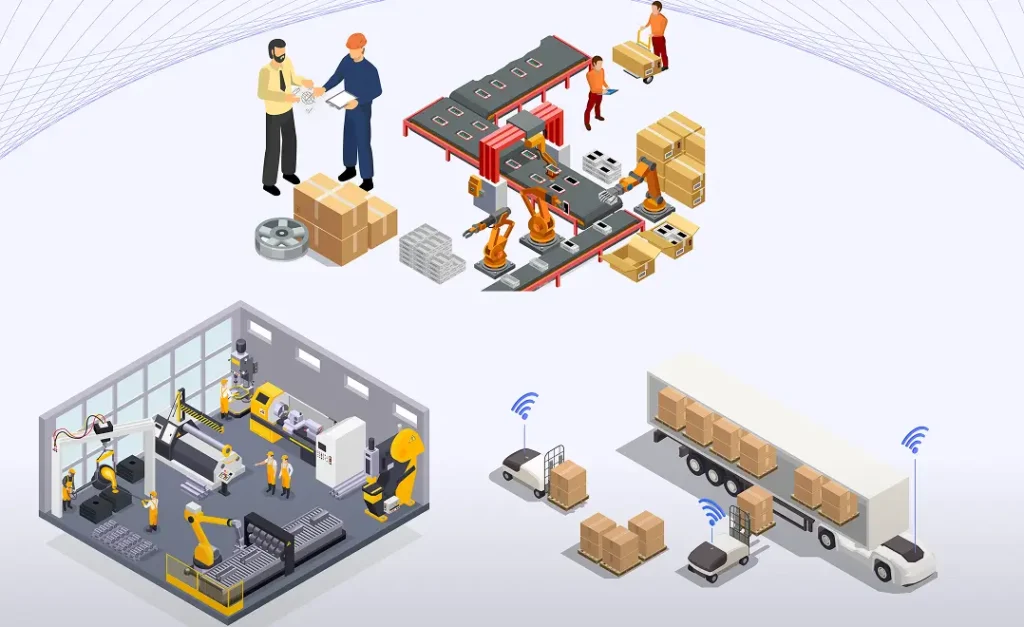
Automate workflows, trigger real-time actions, connecting people, assets, equipment through RTLS-powered location intelligence.