Real-Time Lone Worker Safety & Monitoring
Protect employees working alone with continuous location monitoring, SOS alerts, inactivity detection, and real-time visibility using BLE, UWB, GPS, and RTLS technologies.
The Risks of Working Alone
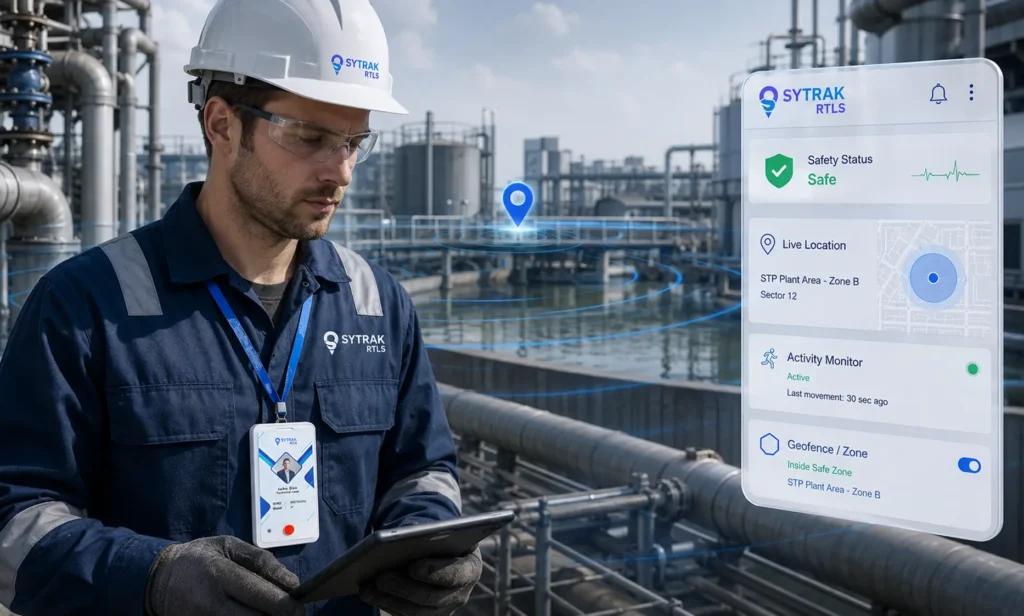
Employees working alone in isolated or hazardous environments face higher safety risks. Without continuous monitoring, delayed incident detection and slow response can impact worker safety. Real-time location visibility helps protect lone workers while improving compliance and response readiness.
Delayed Incident Detection
Emergencies may go unnoticed when employees work in isolated areas.
Unknown Worker Location
Supervisors cannot immediately determine where assistance is required.
Hazardous Work Environments
Workers may be exposed to high-risk machinery, confined spaces, hazardous chemicals, or remote work areas.
Delayed Emergency Response
Without location visibility, valuable time is lost during rescue operations.
Limited Worker Visibility
Managers lack real-time awareness of lone worker locations and safety status.
Safety Compliance Challenges
Organizations must demonstrate effective monitoring of employees working alone.
How Lone Worker Safety Works
1.
Wearable Safety Tag
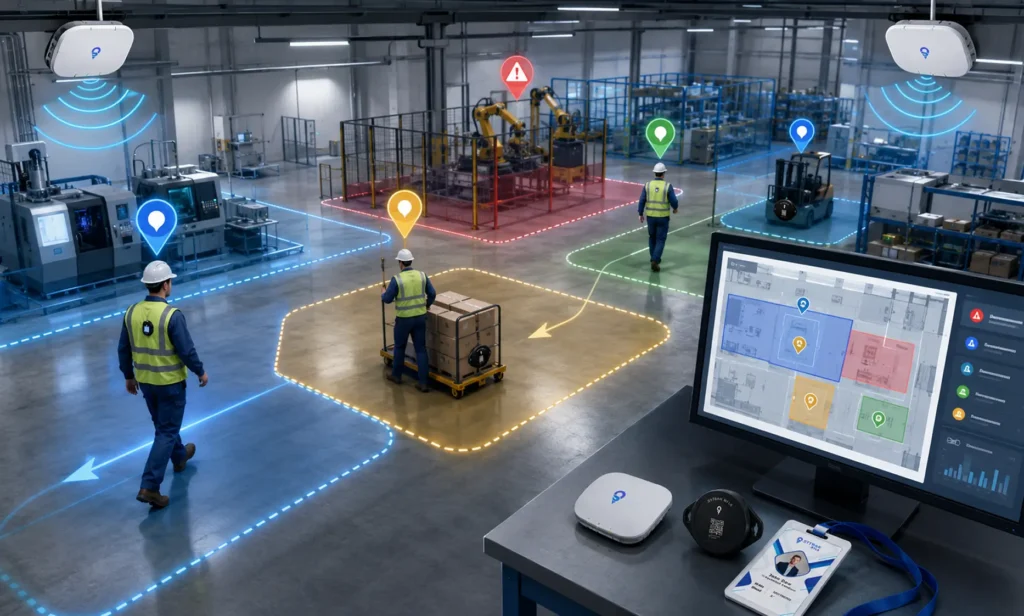
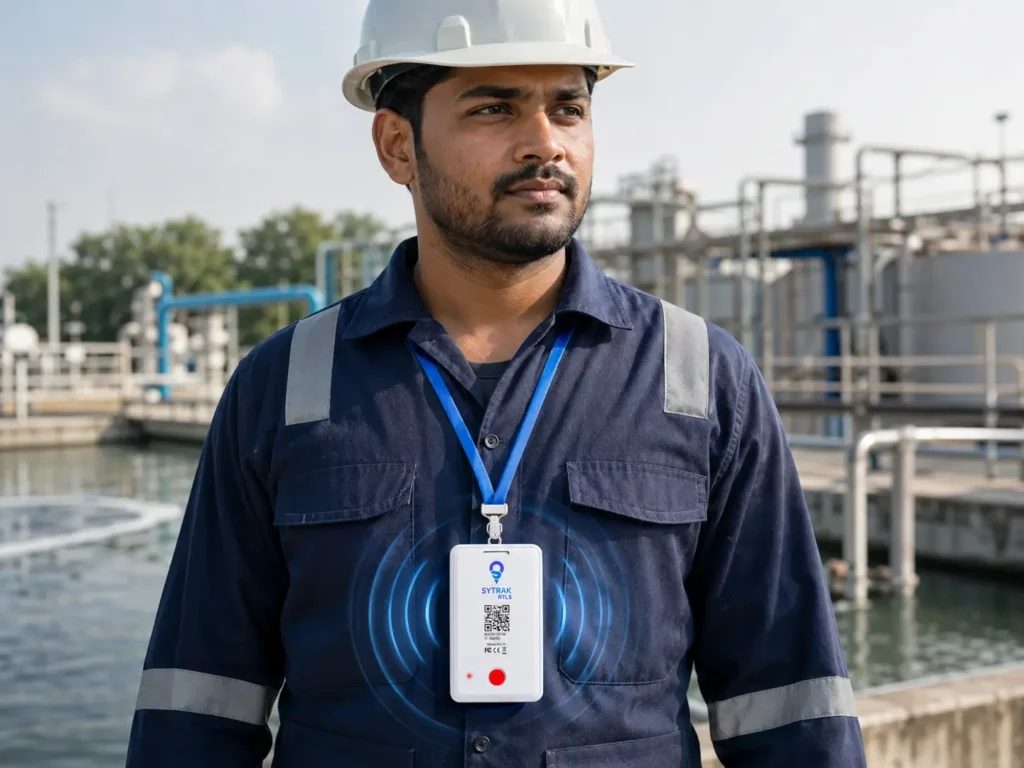
Employees wear an RTLS-enabled safety tag with location tracking, SOS functionality, and optional sensors such as fall detection or health monitoring.
2.
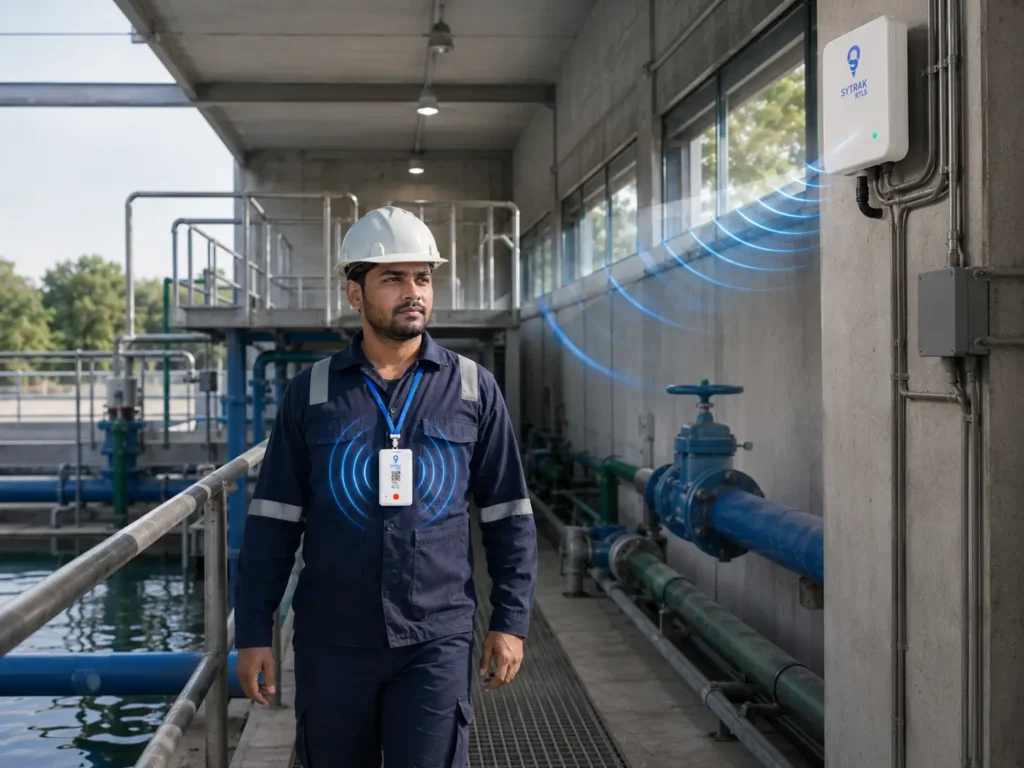
Reader/ Gateway Network
BLE, UWB, RFID, GPS, and gateway infrastructure continuously monitor worker locations throughout the facility or worksite.
3.
Live Dashboard View
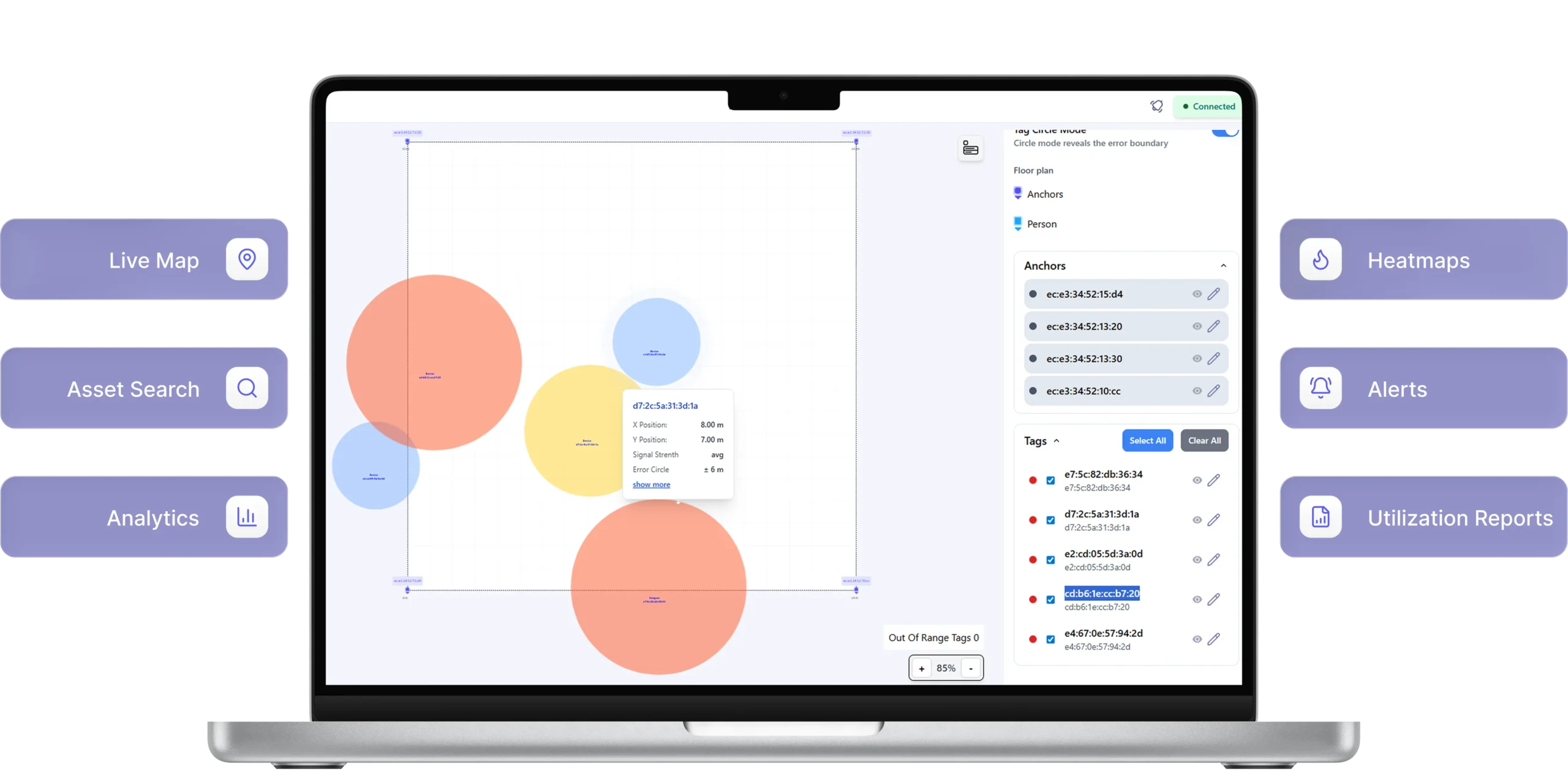
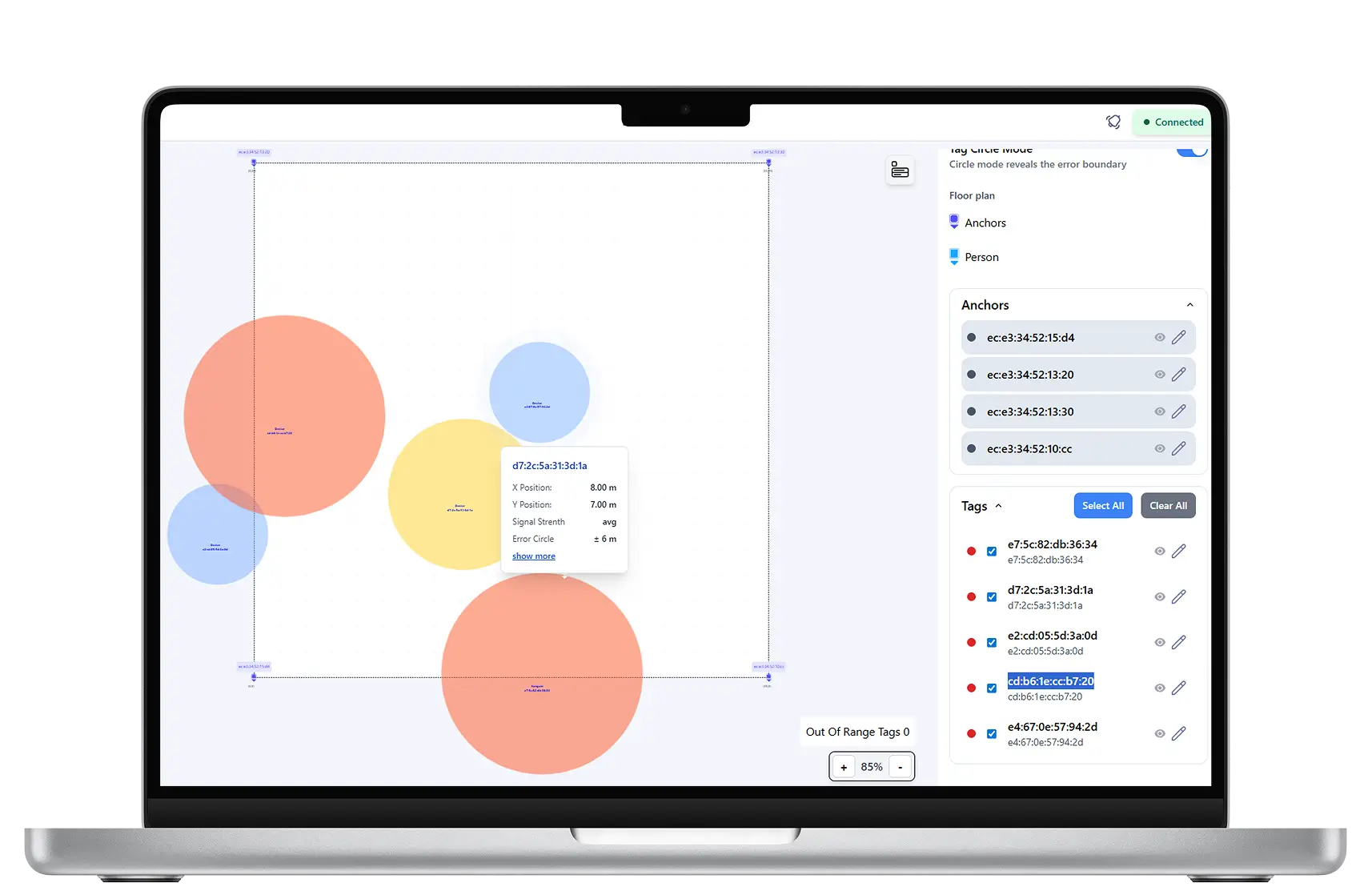
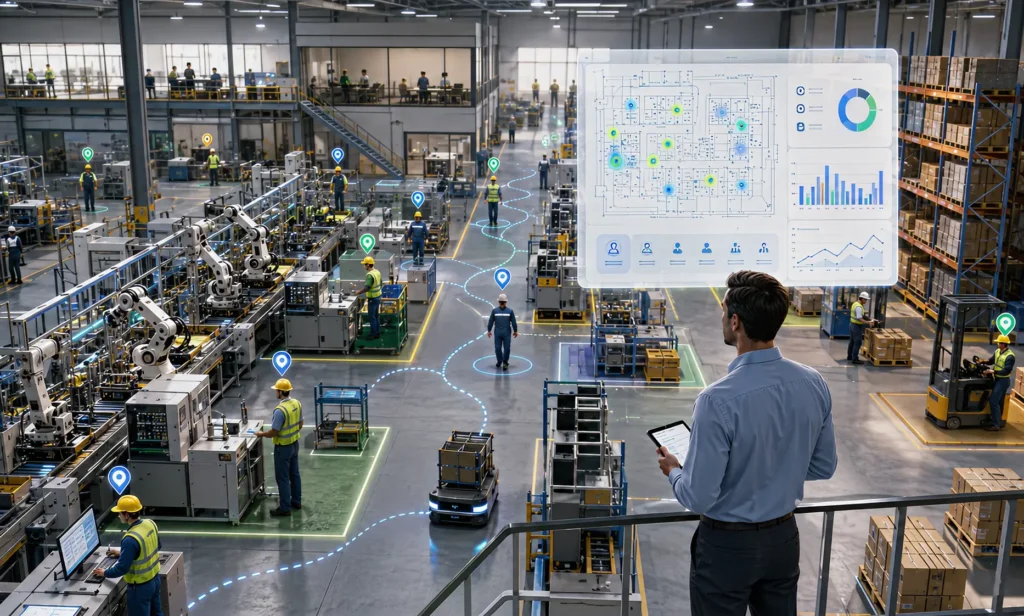
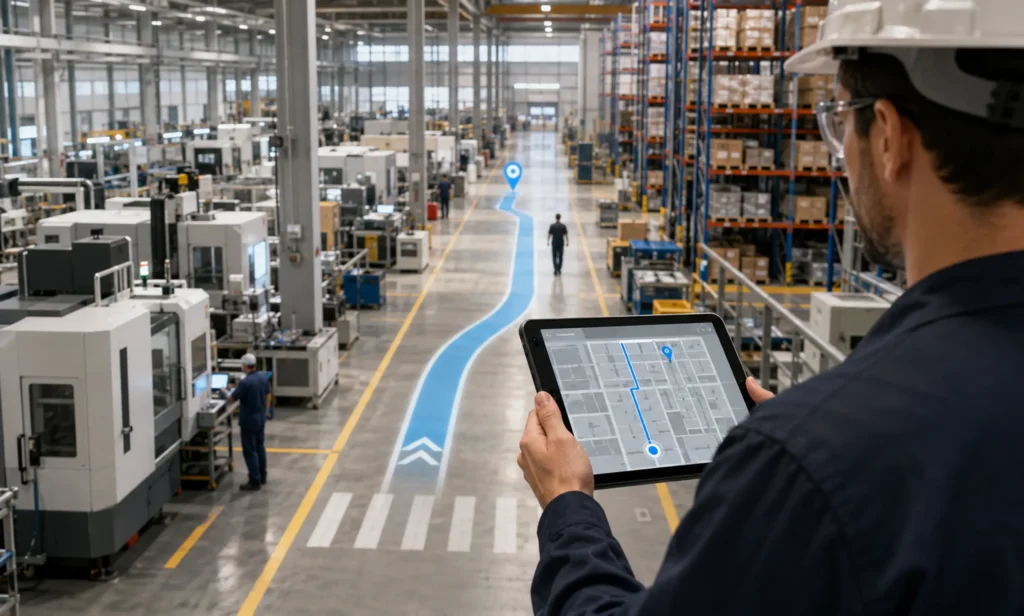
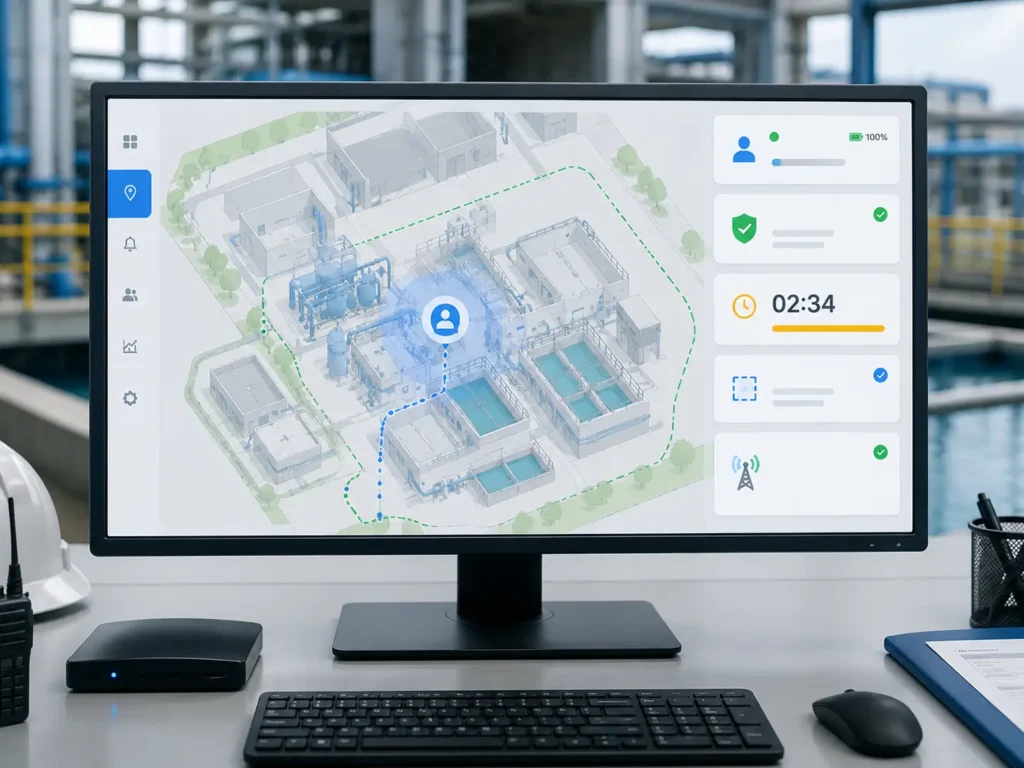
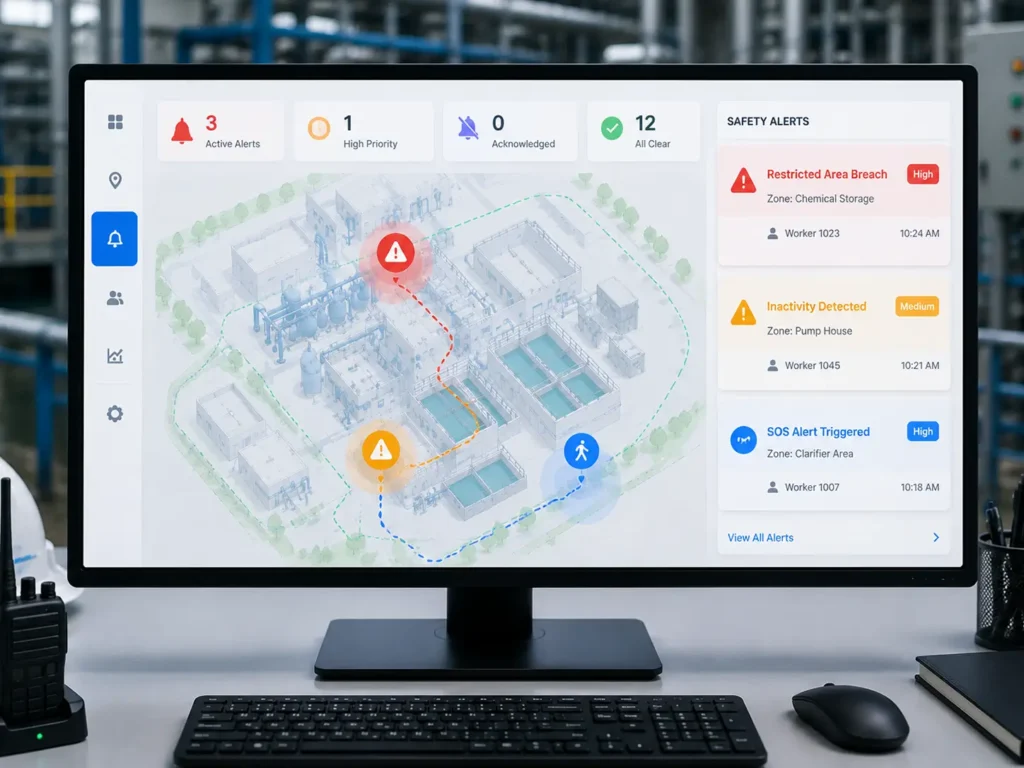
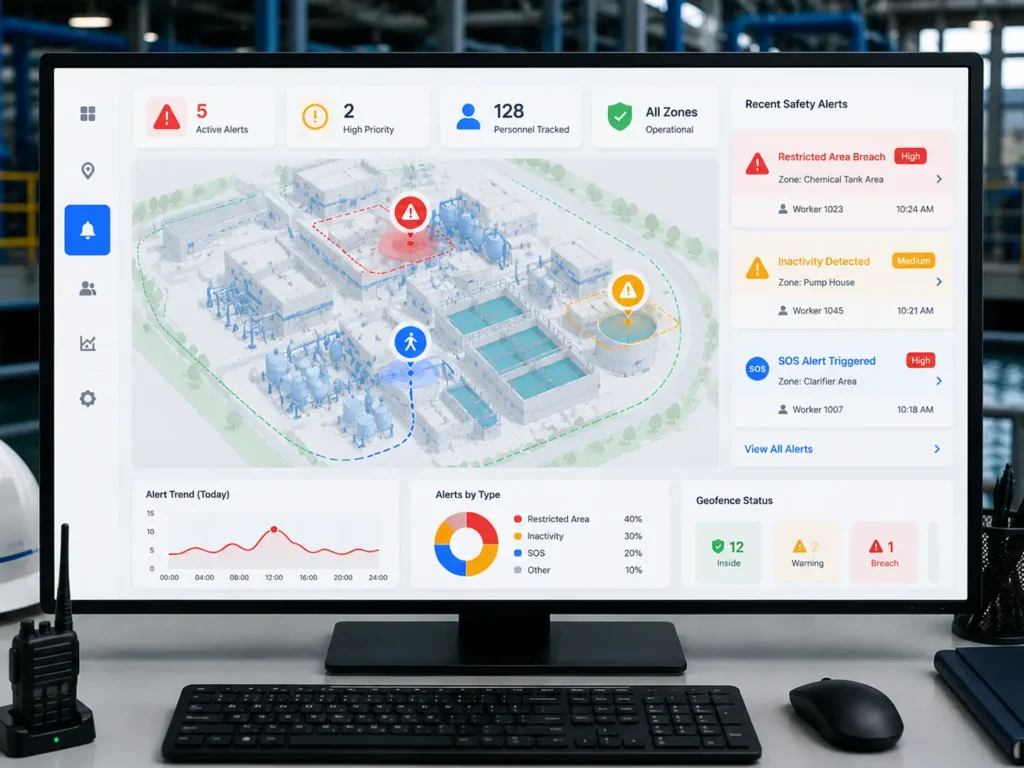
The system tracks worker location, movement, inactivity, and predefined safety events in real time, helping identify potential risks before they escalate.
4.
Safety Alerts
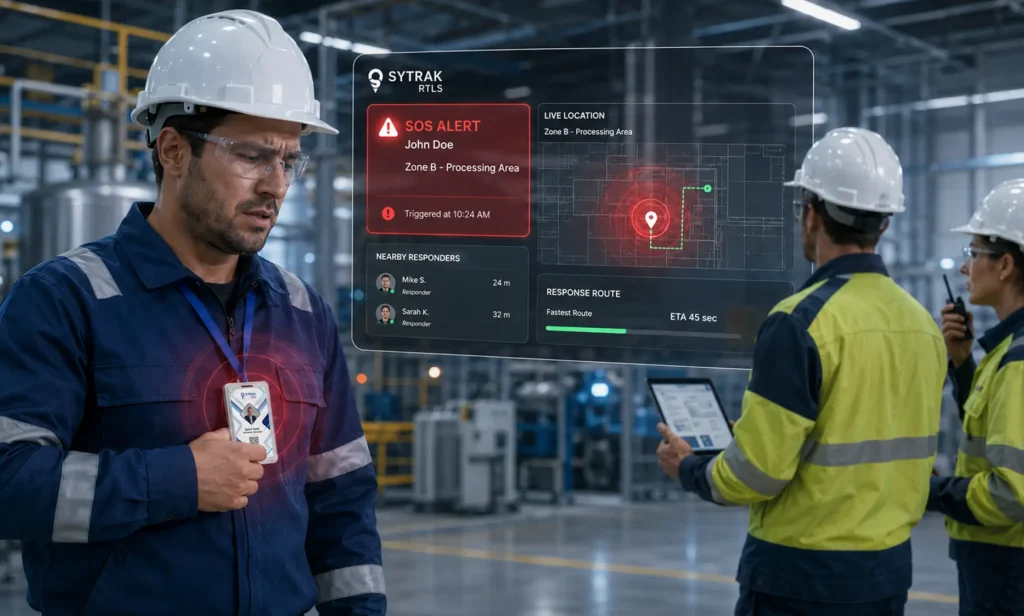
Automatic or manual alerts are generated for SOS activation, prolonged inactivity, geofence violations, fall detection, or other configured safety events.
5.
Analytics Dashboard
Supervisors monitor worker locations, active alerts, safety history, and incident reports through a centralized dashboard.
Key Features
Continuous Worker Monitoring
Real-Time Location Tracking
One-Touch SOS
Inactivity Detection
Geofence Monitoring
Indoor & Outdoor Coverage
Safety Event History
ERP & Safety Platform Integration
Centralized Safety Dashboard
Business Impact of Lone Worker Safety
| Challenge | Benefit |
|---|---|
|
|
✓ Continuous worker protection |
|
|
✓ Faster incident response |
|
|
✓ Real-time workforce awareness |
|
|
✓ Improved regulatory compliance |
|
|
✓ Automated worker monitoring |
|
|
✓ Reduced workplace risk |
Technologies
BLE RSSI
Cost-Effective Zone-level Tracking
BLE AoA
Sub-meter Indoor Positioning
UWB
High-Precision Location Tracking
RFID
Inventory and Checkpoint Visibility
GPS
Outdoor and Long-range Tracking
Lone Worker Safety Dashboard
Success Metrics
Faster Emergency Response
Better Regulatory Compliance
Improved Worker Safety
Continuous Lone Worker Visibility
Results may vary depending on deployment scope, operational environment, and tracking technology used.
Asset Tracking Across Industries
FAQs
A lone worker is an employee who performs tasks without direct supervision or immediate assistance nearby. This includes maintenance personnel, utility workers, field engineers, security staff, and employees working in isolated or hazardous environments.
SYTRAK RTLS continuously monitors worker locations, enables instant SOS alerts, detects inactivity or other configured safety events, and provides supervisors with real-time visibility to improve worker protection and emergency response.
Yes. SYTRAK RTLS supports indoor monitoring using BLE RSSI, BLE AoA, UWB, and RFID technologies, as well as GPS for outdoor environments.
Yes. Alerts can be configured for SOS activation, inactivity, geofence violations, fall detection (supported wearables), and other custom safety rules. Notifications are delivered through dashboards, mobile applications, email, or messaging platforms.
Yes. SYTRAK RTLS can monitor lone workers across multiple factories, warehouses, campuses, and remote sites through centralized cloud or on-premise deployments.
Yes. SYTRAK RTLS integrates with ERP, EHS, access control, security management, and other enterprise applications through APIs and standard integration methods.
Related Use Cases
SOS & Emergency
Enable instant emergency alerts with real-time location for faster incident response using RTLS.
Workforce Visibility
Monitor workforce location, movement, zone occupancy, and activity in real time using RTLS.
Geofencing
Enable intelligent inventory flow, zone-based alerts, and real-time operational dashboards.
Attendance & Shift Visibility
Track medical equipment, staff, and patients across hospital wings for improved care delivery.
Indoor Navigation
Enable emergency mustering, evacuation tracking, and real-time headcounts during critical events.